By Ena Cefo
The Urgenda Foundation together with 900 co-plaintiffs is leading a lawsuit against the Dutch government for failing to reduce gas emissions that contribute to climate change. The lawsuit follows the release of the Oslo Principles on Global Climate Change Obligations by legal experts who outlined governments’ pre-existing legal responsibilities—to “avert climate change and its catastrophic effects” and “to ensure that the global average surface temperature increase never exceeds pre-industrial temperature by more than 2 degrees Celsius”—on the basis of currently existing international human rights law, environmental law and tort law. The Urgenda case requests that the court: “(1) declare that global warming of more than 2 degrees Celsius will lead to a violation of fundamental human rights worldwide ... (2) declare that the Dutch state is acting unlawfully by not contributing its proportional share to preventing a global warming ... [and] (3) order the Dutch state to drastically reduce Dutch CO2 emissions... by 40% ... below 1990 levels.” The hearing began on April 14th, 2015 in the district court in The Hague.
By Ena Cefo
On April 1st, 2015, Palestine became the newest member of the International Criminal Court (ICC)—allowing the ICC to examine serious crimes committed on or from the Palestinian territory. With the request of Palestinian President Mahmoud Abbas to apply the court’s jurisdiction retroactively to June 13, 2014, the 2014 Gaza conflict will also fall under the court’s jurisdiction. Chief Prosecutor Fatou Bensouda opened a preliminary examination into the Palestinian situation, which will look into any “serious crimes” of genocide, crimes against humanity and war crimes—including an occupying power’s transfer of its own civilians into occupied territory. While the United States has announced its disapproval of Palestine joining the ICC and threatened aid cuts, Balkees Jarrah of Human Rights Watch remarked: “Governments seeking to penalize Palestine for joining the ICC should immediately end their pressure ... [w]hat’s objectionable is the attempts to undermine international justice, not Palestine’s decision to join a treaty to which over 100 countries around the world are members.”
By Ena Cefo
The Syrian regime has once again been accused of using
chemical weapons on civilians—using chlorine gas during a March 16th
attack on the town of Sarmin and
between March 16th and 31st on the town of Idlib.
The regime’s continued use of chemical weapons is a violation of the Chemical Weapons
Convention, which Syria ratified in 2013, as well as the UN Security
Council’s Resolution
2209, which “reiterate[d] that no party in Syria should use, develop,
produce, acquire, stockpile, retain, or transfer chemical weapons.” Resolution
2209 warns that future non-compliance with the Security Council’s prior
resolution, Resolution
2118, that prohibited the use of chemical weapons in Syria will lead to the
“impos[ition of] measures under Chapter VII of the United Nations Charter.” The
United States and other members of the Security Council supported a continuing
investigation into the recent allegations of chemical weapon use by the
Organization for the Prohibition of Chemical Weapons (OPCW).
By Ena Cefo
 On April 14th, 2015, President
Barack Obama recommended
that Cuba be removed from the U.S. government’s list of “state sponsors of
terrorism”—following a review and report by the State
Department, which found that Cuba met the criteria for rescission from the
list. Until now, Cuba had remained on the list along with just Iraq, Sudan and
Syria. The removal of Cuba from the list will “eliminate
some sanctions, including restrictions on foreign assistance, a ban on defense
exports and other financial regulations, though the embargo remains in place
[because lifting the embargo requires Congressional action,
such as the proposed bipartisan bill by Senator Klobuchar].”
By Ena Cefo
The UN Commission of Inquiry on Human Rights in Eritrea recently found a “very clear pattern” of human rights abuses in Eritrea, concluding that “most Eritreans have no hope for their future.” Eritrean men and women face indefinite national service from the age of 17, frequent detentions, torture, forced labor and suppression of expression. Exemplifying the dire human right situation, the number of Eritrean asylum-seekers in Europe drastically increased in 2014 to a total of approximately 37,000 from 13,000 in 2013. The Eritrean government wants the focus on the positive healthcare improvements in the country, but the reality of mass (and increasing numbers of) Eritrean migrants crossing the Mediterranean Sea in dangerous conditions remains a blatant sign of the difficult life under the repressive regime.
By Ena Cefo
In the recent October 2014 human rights atrocity in Sudan, the Sudanese army committed mass rapes of at least 221women in the Darfur town of Tabit. Human Rights Watch found that the Sudanese army carried out military operations of entering homes, arresting and beating residents, and raping women and young girls. The Sudanese government has routinely impeded human rights investigations in Darfur by not cooperating with the International Criminal Court (ICC), blocking UN investigators, journalists and humanitarian workers from entering and investigating, and pressuring the peacekeeping mission to withdraw from areas it deemed “stable.” In a hopeful move for Sudanese victims of governmental abuses, on March 9th, 2015, the ICC declared Sudan uncooperative and referred the matter to the UN Security Council to undertake all necessary measures.
By Ena Cefo
Since the Russian occupation of Crimea began in February
2014, the U.N.’s
monitoring mission and the Organization for Security and Cooperation in
Europe identified numerous human rights violations: abductions, unlawful
detentions, and forced disappearances. Over the past year, human rights on the
peninsula have deteriorated further and Human
Rights Watch documented extensive intimidation and harassment of occupation
criticizers, Crimean Tatars, activists and journalists. Crimean residents were forced
to take up Russian citizenship; minorities or others who refused to become
Russian citizens lost the right to continue residing on the peninsula, the
right to free medical care, the right to register property and the right to be
admitted to school or work. Acknowledging the continuing demise of minority
rights during the past year, on March 16th, 2015, the U.S. Department of
State called on Russia to end the brutalities and announced its intentions
to continue the U.S.-imposed sanctions until Russia withdraws from the
occupation.
By Ena Cefo
A February 11th hill briefing on “How to Bring
Stability to Bahrain” featured Rep. Jim McGovern, Bahraini human rights lawyer
Mohammed al Tajer and Human Rights First’s Brian Dooley. Bahrain has been criticized
for oppressing and jailing human rights activists and passing repressive laws
that increase the sentences for anyone “criticizing” the King and allow
denationalization of anyone who “causes harm” to the interests of the Kingdom
or “acts in a way that contravenes his duty of loyalty to it.” In its blueprint
for US involvement in addressing Bahrain’s human rights violations, HRF
highlighted the dangers of failing to act in Bahrain: exploitation of
sectarian tension by ISIS and other extremists, corruption and continued
instability, widespread protests, falling public support for the United States,
the threat to the U.S. Fifth Naval Fleet in Bahrain, and de facto U.S. support
for an authoritarian government. In order to address the situation, HRF
recommended that the United States play a key role in fighting against
corruption in Bahrain, reforming the Bahraini security force and ending the
punishment of civil society leaders.
By Ena Cefo
In response to the proposed
legislation by Senators McCain, Ayotte, Graham and Burr seeking to restrict
transfers of prisoners from Guantánamo, Human Rights First outlined
the exorbitant financial costs of running the Guantanamo prison — costing a
total of $443 million in 2014. 54 of the remaining Guantánamo detainees have
been cleared and most of the others will face hearings to assess their security
threat and potentially clear them for transfer. The newly proposed legislation
presents another block in the Obama administration’s aim to transfer detainees
and eventually close the Guantánamo facility. Along with numerous other human
rights organizations, Amnesty
International has criticized the continued operation of Guantánamo (six
years after President Obama’s executive order to close the facility) as a
leading example of the United States’ hypocrisy on human rights.
By Ena Cefo
The ICJ ruled
against the complaint and counter-complaint between the governments of Croatia
and Serbia for genocide allegedly committed in their respective territories in
the early 1990s. The ICJ acknowledged widespread violence and destruction, but
did not find “intent to destroy a group” as required for a finding of genocide
under the Genocide Convention of 1948. In its report, the
ICJ differentiated ethnic cleansing from genocide and ruled that the intent “to
inflict damage on [a group] or to remove the population” did not suffice to
prove genocide. Serbian and Croatian leaders expressed disappointment at the
ruling, but hoped that the resolution of the cases would allow both countries
to move on and rebuild their futures.
By Ena Cefo
For the first time in 10 years, on October 26th, 2014, North
Korean officials unexpectedly
met with the United Nations Special Rapporteur on the situation of human
rights in North Korea, Marzuki Darusman. In his report
on the situation of human rights in North Korea released on October 24th, 2014,
Mr. Darusman urged the United Nations to ensure accountability for the human
rights violations in North Korea by formally referring the situation to the
International Criminal Court. Mr. Darusman mentioned the culpability of
officials of the Democratic People’s Republic of Korea (DPRK) for the
“systematic, widespread and gross” human rights violations against its people.
Mr. Darusman hoped that the meeting with DPRK officials was a sign of further
engagement on human rights, but urged that North Korea must be willing to address
the full scale of its human rights problems.
By Ena Cefo
The United
Nations voiced its concern over the Dominican Republic’s withdrawal from
the Inter-American Court of Human Rights (IACHR). The withdrawal from the
court’s jurisdiction follows the IACHR’s order that the Dominican Republic
should revoke its September 2013 domestic court judgment that children of
undocumented Haitian migrants cannot obtain Dominican nationality. The Court
expressed concern that this judgment denationalized hundreds of thousands of
people who have been considered Dominican throughout their lives and found the judgment
to be discriminatory against Afro-descendants within the country, i.e.,
Dominicans of Haitian descent. The Dominican Republic withdrew from the IACHR’s
jurisdiction, claiming that the country’s recognition of the jurisdiction was
“unconstitutional,” but the Office of the UN High Commissioner for Human Rights
(OHCHR) voiced its hopes that the country would reconfirm the jurisdiction of
the IACHR.
By Ena Cefo
In a report titled “I Already
Bought You,” Human Rights
Watch details the horrific condition of the approximately 236,500 migrant domestic
workers in the United Arab Emirates, who moved to the Gulf nation on promises
of high wages and good working conditions. Labor-recruiting agencies have been
accused of confiscating passports and personal belongings, and of exchanging
the original contract terms with terms requiring longer hours and lower pay.
Furthermore, the U.A.E.’s kafala visa
sponsorship system gives the employer
complete control over the worker, by imposing administrative offenses on
workers who leave the employment without the employer’s permission. Female
workers often suffered physical and sexual assaults, as well as verbal assaults
from their employers.
By Ena Cefo
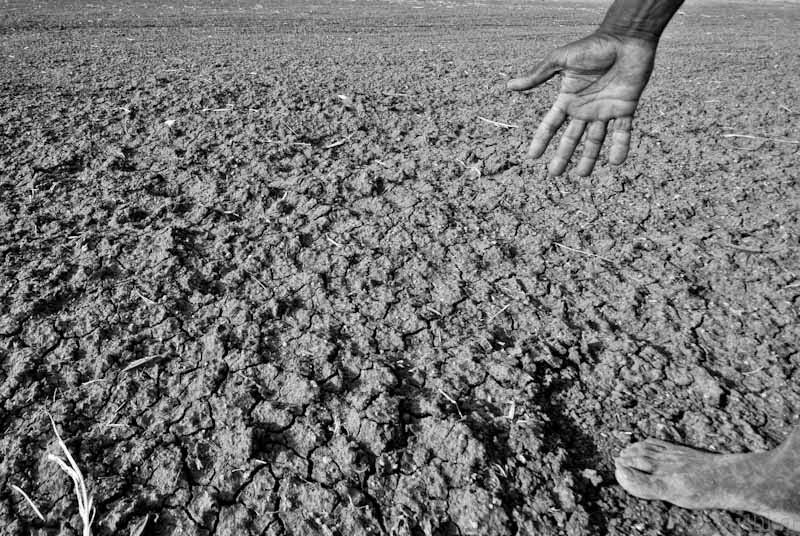 On October 14, 2014 the Department of Defense (DoD) released
a report warning
about the effect of climate change on global political instability, poverty,
hunger and conflict through the lens of the U.S. armed forces and their military
tasks. The report gives the U.S. military a better understanding of how climate
change will impact its bases, military missions, relief efforts, training, and
infrastructure. Increasing global temperatures, changing and extreme weather
patterns, and rising sea levels are set to cause future food shortages,
infectious diseases, and mass migrations. These catastrophic results will be
the leading factors in an immediate threat to national security and global political
unrest.
By Ena Cefo
U.S. investors, headed by hedge funds NML and Aurelius
Capital Management, are suing Argentina in U.S. courts for full payment on
their Argentine government bonds totaling US$1.3 billion. The investors bought
Argentine bonds for low prices after Argentina’s 2001 default, when the bonds were
at a dramatic low. Argentina defaulted on its debt after the investors rejected
a widely accepted bond restructuring agreement. The UN Human Rights Council’s resolution condemned
the activities of the so called “vulture funds” and warned against the effect
of payments to such “vulture funds” on the deterioration of human rights
conditions in South American countries such as Argentina.
By Ena Cefo
The 2014 report
by the Congressional-Executive Commission on China (CECC), an independent U.S.
agency tasked to monitor human rights and legal development in China, showed a
deterioration in China’s human rights and rule of law. During his tenure, president
Xi Jinping strengthened the authoritarian model of his predecessors, especially
over the pertinent issues of Hong Kong’s autonomy, Internet and media freedom,
ethnic minority rights, religious freedom and civic engagement. Among numerous
other concerns, the Chinese government has been accused of implementing harsh
security measures in the ethnic minority regions following incidents of
violence, continuing the imprisonment of human rights activists and minority
religion practitioners, allowing violence against women – including forced
sterilizations and abortions, and discriminating against Uyghur Muslims. According
to the CECC, such practices add insecurities to the U.S.-China relationship, as
well as China’s own development.


