Showing posts with label Russia. Show all posts
By Alexandra Moffit

Picture: Globe License: Public Domain

United Nations

Under a new Secretary-General, the United Nations took several new steps based on studies in 2017.

·       Antonio Guterres begins role as Secretary-General of the United Nations in January.
·       The United Nations Security Council unanimously voted to issue new sanctions to North Korea. These sanctions were in response to its burgeoning nuclear program and its ballistic missile program.
·       The United Nations’ agency that deals with aviation proposed a global drone registry that would aid local law enforcement agencies. This registry would be a step towards global regulations dealing with the small crafts.
·       Russia and China vetoed resolutions that would have sanctioned Syria for its use of chemical weapons.
·       United Nations agencies reported during 2017 that 2016 was the first time in the 21st century that hunger increased. Possible reasons offered by the United Nations for this increase were climate change and conflict. These would cause an increase in food insecurity around the world. There are currently around 815 million chronically malnourished people around the world.
·       The United Nations and other organizations began investing in blockchain technology. Organizations like the World Food Programme launched pilots that use blockchain in delivering food.

The United States and International Organizations

With the United States changing leadership as President Trump began his tenure in office, the United States changed its relationships with various international organizations significantly during 2017.

·       The United States, in one of Donald Trump’s first acts as President, declared its intention to abandon the Trans-Pacific Partnership. The previous administration had negotiated the large free trade deal with various nations but had not come into effect yet.
·       The United States withdrew from the Paris Climate Accords in June, becoming one of the only countries not party to the climate agreement.
·       The United States, Canada, and Mexico began to renegotiate the North American Free Trade Agreement following President Trump’s dissatisfaction with the agreement. A relocation or dissolution of the agreement would cause major changes in the economies of each nation, as well as trade laws.
·       The United States withdrew from UNESCO, the United Nations cultural organization, in October. “At the time when conflicts continue to tear apart societies across the world, it is deeply regrettable for the United States to withdraw from the United Nations agency promoting education for peace and protecting culture under attack,” Director-General of UNESCO Irina Bokova said. The United States indicated its reason for leaving as the organization’s inclusion of Palestine as a member in 2011.

Refugees and International Organizations

As refugee numbers increased in 2017, various international organizations took steps to combat problems.

·       Security in Burma has been conducting ethnic cleansing of Rohingya Muslims. Some have sought asylum in Bangladesh. The crisis has had a global impact and is ongoing. A new UN pilot program could provide refugees in Bangladesh with work permits.
·       International Organizations like the World Bank used their leverage to try to push Burma to stop its persecution of Rohingya Muslims. The World Bank announced it would be withholding a $200 million loan it had promised to the country.
·       The United Nations High Commissioner on Refugees announced that there are over 3 million stateless people around the world. The agency urges countries to grant citizenship to these stateless people, which would provide them with basic health and personal rights.


By Erika Suhr

Picture: Globe License: Public Domain

A Rocky Start

At the start of 2017, the International Criminal Court (ICC) seemed to be experiencing an existential moment. Russia had withdrawn itself from the process of ratifying the Rome Statute internally in protest of the ICC’s ruling that Russia’s 2014 takeover of the Crimea peninsula had been an armed conflict between it and Ukraine, making the annexation fall under the court’s jurisdiction. In January, a non-binding African Union resolution called for its members to withdraw en masse from the ICC, with some countries arguing that the ICC, beyond subverting their sovereignty, disproportionately targets African countries. The African Union supports instead, a regionalization of international law, where there would be a war crimes court, specifically devoted to Africa. Opponents worry about the independence of such a court, and that the risk of violations of war crimes in African states would rise as a result. The Foreign Minister of Nigeria noted the vital role that the ICC plays in holding leaders accountable, and stated that Senegal, Cape Verde, and other countries would speak out against the resolution to withdraw.

Burundi Withdrawal

Burundi, The Gambia, and South Africa all decided to withdraw from the ICC, but ultimately, only Burundi carried out its threat. The Gambia, under new leadership, announced its reversal of the decision to withdraw on state television, citing its “commitment to the principles enshrined in the Rome Statue of the International Criminal Court”. South Africa also revoked its decision to withdraw from the ICC, citing a recent court ruling that declared the withdrawal “unconstitutional and invalid.”
On October 27, 2017 Burundi, a year after declaring its intentions, became the first country to withdraw from the International Criminal Court.  The timing of Burundi’s withdrawal coincides with a report released by the United Nations Commission of Inquiry. The report recommended that a criminal investigation on crimes committed in Burundi be initiated in response to evidence of torture, sexual violence, extrajudicial killings, disappearances, and illegitimate arrests and detentions sponsored by the regime of Burundi’s president, Pierre Nkurunziza.

A Reinvigorated Court

Perhaps as a response to the criticism of the African Union and others, the ICC’s prosecutor has publicized a shift away from Africa towards other regions. She announced that she is opening preliminary investigations into crimes perpetuated in the Philippines, Afghanistan, and Venezuela. The Philippines probe will focus on allegations reaching back to July of 2016, relating to the government’s war on drugs, which has since killed thousands of people, many under dubious circumstances and justifications. The Venezuelan probe will likewise focus on government and police forces, in that case, that the government forces “frequently used excessive force to disperse and put down demonstrations,” and tortured and abused members of the opposition who were unlawfully detained by the government, indefinitely.

Most controversially, the prosecutor called upon the court to open an investigation into war crimes and crimes against humanity in Afghanistan. The scope of that investigation could encompass U.S. troops. No specific parties or events have been named, but a report released by the prosecutor’s office says that there is a reasonable basis to believe that the following crimes have been committed:
  • "Crimes against humanity and war crimes by the Taliban and their affiliated Haqqani Network;
  • "War crimes of torture and related ill-treatment by Afghan government forces, in particular the intelligence agency (National Directorate for Security), and the Afghan National Police;
  • "War crimes of torture and related ill-treatment, by US military forces deployed to Afghanistan and in secret detention facilities operated by the Central Intelligence Agency, principally in the 2003-2004 period, although allegedly continuing in some cases until 2014."


By Navy Binning 


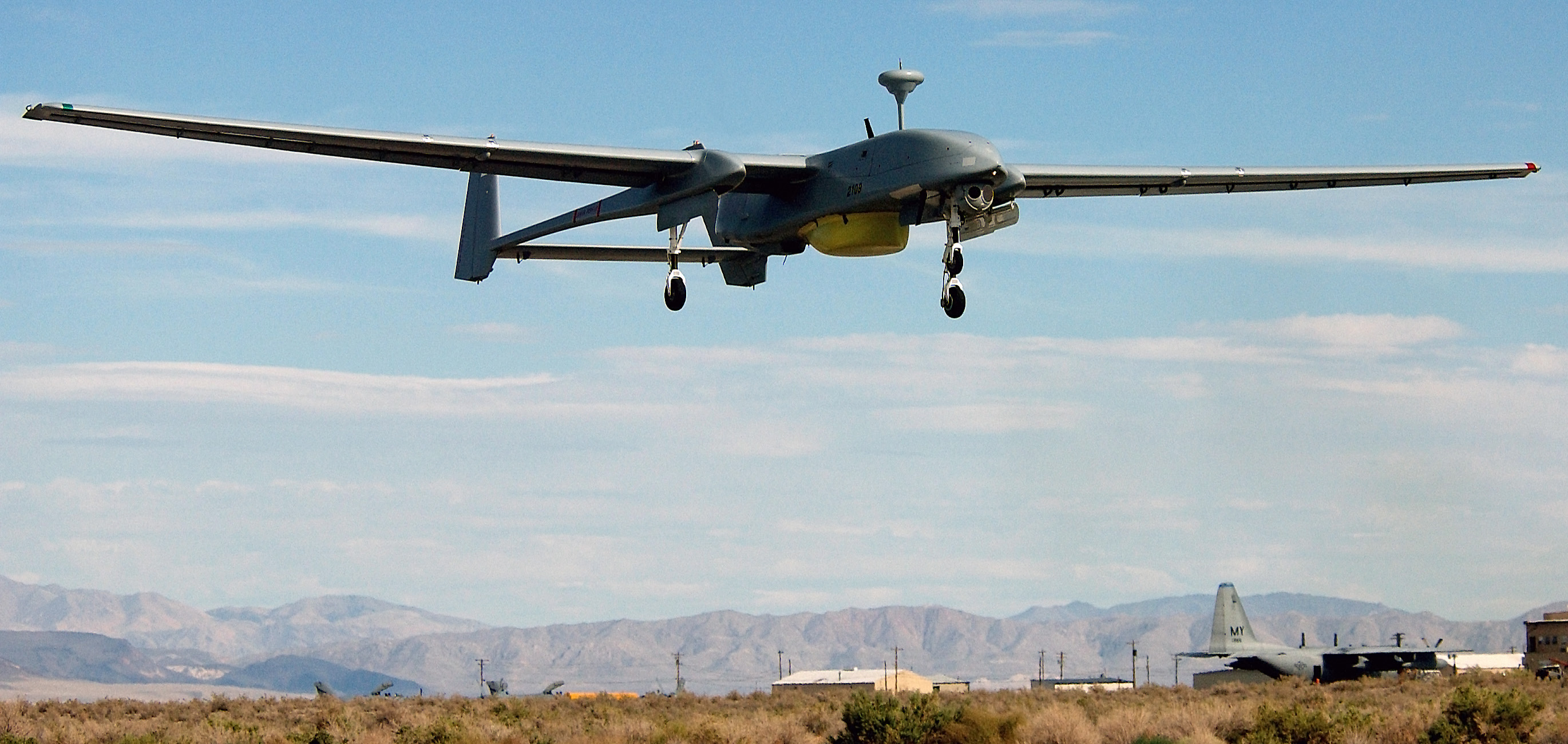
Photo: Heron 1 Drone , Creative Commons License

On October 5th 2017, the Center for Strategic and International Studies (CSIS), an international security policy research organization, hosted Sam Bendett, research analyst with the Center for Naval Analysis (CNA) for a discussion on Russian military robots. Bendett’s talk was primarily focused on developments in Russian military technology.

The increasing prevalence of military robots gives rise to concerns of international humanitarian law, such as discrimination and proportionality. Most notably, the ability to control military weapons remotely prevents transparency and makes it more difficult to hold perpetrators of war crimes accountable.

History of Military Robots in Russia

Bendett began the event by providing a summary of the history and current status of military robots in Russia. During the Cold War, the use of unmanned aerial vehicles (UAVs), more popularly known as “drones”, were used heavily. After the collapse of the Soviet Union in 1991, Russia’s defense sector was hit hard, which impacted UAVs as well.

Russia’s military technology is now behind many nations — including the United States, Israel, and China. As recently as 2008, Russia’s military was in the same condition as it was during the Cold War. A shift began around 2011-12 with Russia placing a greater emphasis on technological advance in the military. In 2014, Russian Defense Minister Sergey Shoygu announced that Russia planned to spend up to 9 billion USD on military robotic developments through 2020.

UAVs

Russia currently operates many UAVs. Most of the UAVs are small and simplistic and used for information gathering, observation, electronic warfare, communication, and target acquisition. Additionally, Russia has a number of mid-to-long range UAVS that are used primarily for targeting and have ranges of up to 120 kilometers.

An increase in interest in UAVS and support from the government has led to a recent resurgence of development of UAVs in Russia. Several programs of various levels of progress and sophistication are currently underway in Russia.

Russian UAVs in combat have already been observed in Ukraine and Syria. In Syria, these have primarily been used as target acquisition, frequently to increase precision of artillery strikes. Russia has reported an increased effectiveness as a result of the use of UAVs in combat.

1) Ukrainian forces have responded by turning to United States-supplied drones.  
2) The United States has previously aided Ukraine by supplying drones for self-defense. Whether this will continue under the Trump administration, which seeks to improve ties with Russia, is unclear.
3) Ukraine has responded to this threat with attempts to improve its own UAVs. These have been complicated due to high purchase costs and a corrupt government. Ukraine is instead turning to innovative solutions, including a public crowd-funding project to purchase UAVs and a crowd-funded start-up that aims to build new UAVS.

Unmanned Underwater Vehicle

Unmanned Underwater Vehicles (UUVs) are becoming more prevalent as Russia has placed an emphasis on arctic exploration. Russia is aiming to increase its maritime capabilities so that its technology can move farther from shore and deeper. 

Although Russia does possess UUV technology, it is primarily international.  There is now an attempt to replace these with domestic models in the next several years. Most of the technology is in the testing and evaluation stages.

This technology includes UUVs that can be used for surveillance, search and rescue duties lasting up to 6-9 months, and repair services. Additionally, a drone that can imitate and re-produce enemy vessels’ fields is being developed.

There is also development of a nuclear capable submarine. Last year, a nuclear submarine that posed a threat to US harbors and ports was tested, but little information has arisen since.

Other technologies

Other technologies being developed include a virtual battlefield to test military robotics and drones, an incredibly powerful computer that will be able to control air and sea military robots, and unmanned ground vehicles.

The Future of Russian Military Technologies

For many years, Russian military technologies were developed by a number of different and uncoordinated organizations. In recent years, this has changed as Russia aims to streamline its development. In 2014, the Minister of Defense established the Creation of Perspective Military Robotics Program and formed a commission for the development of robotics. In 2016, Russia also launched an annual conference called the Robotization of the Armed Forces of the Russian Federation.

Russia is working with a number of organizations, including research institutes and higher education entities, to create a uniform approach to military development and set a framework for research and developments to be undertaken. By drawing upon the nation’s industrial, technological, and intellectual potential, Russia is working towards creating a completely new armed force that will be able to further advance Russian foreign policy goals on an international scale. As President Putin recently declared — “Whoever masters [artificial intelligence] will get to rule the world”.

Should readers wish to view Sam Bendett’s talk in full, an online recording can be found here.
By April Kent

The European Union is expected to hold discussions about whether Russia has fulfilled the Minsk agreement, impacting the automatic extension of sanctions against the country. This comes after senior European officials warned in early February that time is running out for Russia and Ukraine to fully implement last year’s cease-fire and peace agreements, saying “difficult” issues must now be tackled. German Chancellor, Angela Merkel, explained, “[w]e still don’t have a sustainable cease-fire, which is naturally a prerequisite for the implementation of different points in the Minsk agreement.” However, Russia’s Permanent Ambassador to the European Union, Vladimir Chizhov, stated at the end of February that he expected anti-Russia EU sanctions to expire as soon as summer 2016: “I think that at some point, I hope that already in the summer, they will simply no longer be in force,” Chizhov said in an interview with Rossiya 24 television. The Minsk agreement was negotiated by Ukraine, Russia, Germany, and France, and lays out steps to secure the end of the armed conflict in Donbas, Ukraine, which broke out in 2014 after people in the region refused to accept the forceful change of power in Kiev. The conflict has resulted in over 9,000 deaths and the displacement of more than 2 million people, according to the UN.
By Stacy Closson*

Russian premier Vladimir Putin (right) and his Chinese counterpart, Xi Jinping (center), have both resorted to paradoxical applications of international law.
Photo: www.kremlin.ru

China and Russia judge territorial integrity of a sovereign state to rule supreme: as Permanent-5 members of the United Nations they block uses of force under Chapter VII of the Charter in most cases.  Yet in their regions, sovereign lines are blurred, as evidenced by Russia’s takeover of Ukraine’s Crimea and China’s building of artificial islets over uninhabited reefs in disputed jurisdictions.  This conflicting—and paradoxical—use of international law by China and Russia has remained largely unchallenged, as regional states have been too weak militarily and economically to challenge them.  However, recent decisions by regional states to turn to international law could have serious consequences for these two powers. 

On China, an arbitral tribunal in The Hague held that it has jurisdiction over key issues in the Philippines’ dispute against China over its South China Sea claims.  It will be difficult for China to ignore this case, as both it and the Philippines are parties to the United Nations Convention on the Law of the Sea (UNCLOS), and the former is asserting its right to exploit the 200-nautical mile Exclusive Economic Zone.

This decision could affect disputes with other states with overlapping claims in the sea over issues of maritime routes, oil and gas deposits, and fisheries. Vietnam is considering filing a similar suit.  Taiwan, on the other hand, issued a statement that it did not recognize the court’s ruling, asserting its rightful claim to islands under dispute in the South China Sea.  However, the Taiwanese government did say that it remained opened to working with other parties to ensure peace and stability.  

On Russia, Ukraine has just announced that its national oil and gas company, Naftohaz Ukrainy, plans to sue Russia over the assets lost in Crimea’s Black Sea and the Sea of Azov.  The takeover of Crimea has put production sharing agreements that the Ukrainian government had previously signed with Italy’s Eni and ExxonMobil on hold.  Meanwhile, the Government of Ukraine is pursuing an action against Russia over Crimea at the European Court of Human Rights (ECHR). 

Both China and Russia have issued statements that they do not view these international courts in these particular cases to have a say in their sovereign affairs. Russia’s constitutional court ruled that Russia is not obliged to obey ECHR verdicts.  China released a position paper arguing that the Philippines’ maritime delineation claims were merely territorial sovereignty claims and therefore the UNCLOS tribunal has no jurisdiction. 

It is unclear what would push China and Russia to obey ultimate findings of an international court.  Reputational losses seem not to have hindered either’s moves up to this point.  Friendly relations with neighbors also do not seem to be a priority.  Pressure from the United States remains on both countries to reverse recent territorial grabs to no avail, despite the most severe sanctions placed on Russia since the Cold War.

*Dr. Stacy Closson, Global Fellow at the Woodrow Wilson Center’s Kennan Institute; Assistant Professor at the University of Kentucky’s Patterson School of Diplomacy & International Commerce