Showing posts with label finance. Show all posts
By Eric Olson


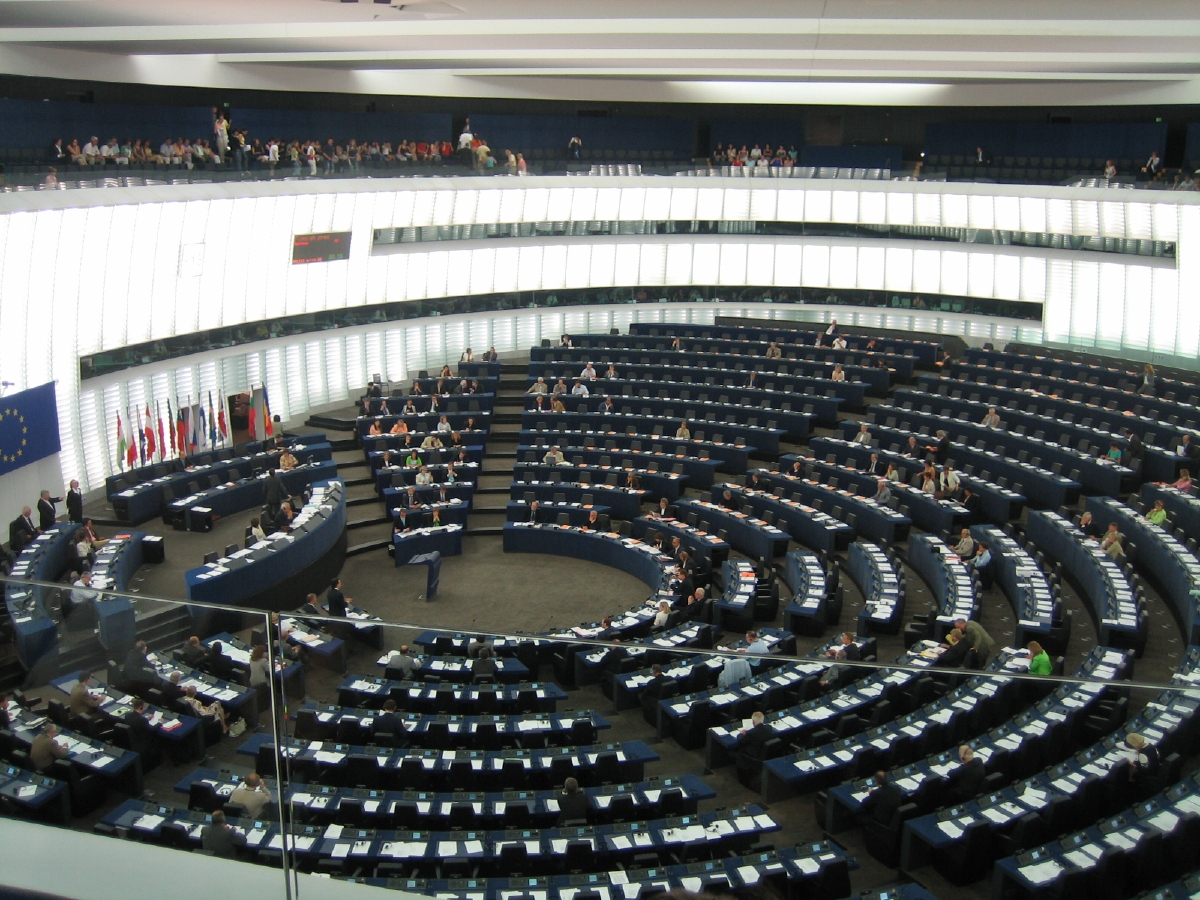
EP_Strasbourg_hemicycle_l-gal.jpg

European market watchers nervously anticipate the effects of the second Market in Financial Instruments Directive (MiFID II), the newest iteration of European Union investment services regulations. Called the European Union’s “most ambitious, yet controversial, packages of financial reform” by the Financial Times, MiFID II applies to European Union member states plus Iceland, Liechtenstein, and Norway starting on 3 January 2018.

The original MiFID took effect in September 2007 with the aim of increasing the competitiveness of the European markets through uniform controls, ultimately fostering the development of a European single market. The launch of MiFID, however, unluckily coincided with the onset of the financial crisis, the effects of which underscored the shortcomings of the regulations. Because MiFID I primarily focused on equities markets, the regulations were ill-equipped to handle the systemic pressures caused by the 2007 crisis.

In October 2011, the European Union began the process of revising MiFID I, spending the next two years debating various proposals and approving the final version of the regulations in 2014. Although MiFID II was originally set to take effect in 2017, in October 2015, the European Securities and Market Authority (ESMA) - the regulators in charge of MiFID II implementation - announced that due to the technical challenges of such a large-scale implementation, they would not be ready for a 2017 MiFID II launch. Because the law did not contain enough detailed guidance, the European Union delayed implementation by a year so ESMA could produce technical implementation standards.

MiFID II’s changes to investment regulation touch practically every aspect of investing. One of the largest changes in MiFID II is a shift from phone trading to electronic trading in order create a reliable record of trade transactions. For example, trades will now be timestamped to the millisecond, and traders must keep this data on file for at least five years. MiFID II also imposes new regulations on research data used by asset managers to make investments. Previously, traders received data for free, imposing the research costs on their clients through trading fees. Now, traders must budget for trading and research separately, with the goal of providing clients a research trail that allows them to evaluate the efficacy of their asset managers.

Proponents of MiFID II argue that the regulations will achieve their goals of increased transparency, while also creating uniform, efficient market structures. However, financial analysts fear that the wide-reaching regulations could negatively disrupt the market. Regardless of one's opinion, to prepare, market traders must effectively understand how the 1.4 million paragraphs of new rules will affect their work in the European financial markets.

Importantly, non-European traders must also carefully examine the new regulations because any European investments and research data could fall under the purview of the MiFID II regulations. U.S.-based firms especially should heed any guidance the SEC, which has the power to waive some MiFID II rules (such as the prohibitions on direct payment for research) as applied to U.S. traders. On 26 October 2017, the SEC issued three letters providing temporary guidance to financial markets investors detailing how the MiFID II regulations apply to U.S. investors, promising permanent guidance regarding the regulations in thirty months. The SEC, and the global financial sector as a whole, will surely be watching Europe closely after MiFID II’s commencement in early January 2018 to see the positive or negative effects of MiFID II on the market.
By Brian Kesten:


Imagine several northeastern states, New York, New Jersey and Delaware, voted to form an independent nation apart from the United States. This hypothetical exercise isn’t a perfect comparison, but it might help explain why so many financiers in London are scrambling in the wake of June’s Brexit vote. Long the financial capital of the world, London will likely suffer human and financial capital losses as systematically essential financial systems shift to cities within the European Economic Area (EEA).
By Clifford Hwang

An injunction in 2012 barred Argentina, after it defaulted on $100 billion in 2001, from accessing the international finance markets until the country paid its creditors, including those who had rejected the restructuring deals. Now after the Second Circuit, on April 13, affirmed the district court’s February 19 decision to lift the injunction, Argentina will be able to access the global market.  Argentina is expected to raise funds in $15 billion bond offering, a large portion of which will be used to pay creditors with which it has reached a settlement.   
By Victoria Hines

Brexit, a reference to the possibility of Great Britain leaving the European Union (EU) upon a referendum, has recently been at the forefront of the news cycle.  The passage of the European Union Referendum Act of 2015, allowing for a referendum on whether the UK should remain in the EU, has ignited a debate on the desirability of continued EU membership. UK Prime Minister David Cameron conducted negotiations in Brussels last week to try to encourage European leaders to support his EU reforms before the projected June 23 referendum. These objectives, which Cameron outlined last November, included: acquiring insurance that the Eurozone countries are not able to manipulate financial regulations for non-euro nations, reducing red tape on European businesses, enhancing national parliament power by exempting Britain from an “ever closer union,” and controlling migration. This deal, which gives Britain “special status” in the EU, is now being used by Cameron to assemble support for the UK to remain in the EU.   
By Clifford Hwang

Want to drink coffee and play with a cat in DC?  You can do that at Crumbs & Whiskers, thanks to a successful fundraising campaign on Kickstarter.  People can “invest” in all sorts of campaigns ranging from technological inventions to personal travel trips on a wide variety of platforms including Kickstarter, Indiegogo, or Go Fund Me.  Although some campaign starters will promise something in return for investments, these donation-based investments do not allow investors to share in the projects financial success.  In other words, investors cannot buy equity in the project or company, which can lead to serious outrage in certain instances

Often considered a new method of fundraising for small businesses and entrepreneurs, crowdfunding has great potential because it fills the financing gap that bank will not fill.  On the other hand, crowdfunding and other internet based financing is susceptible to fraud, especially if the majority of investors are not financially savvy. Cognizant of this potential, many countries around the world have enacted legislation to regulate crowdfunding and give opportunities to investors to buy shares in smaller companies.  For example, in the United States, under the SEC’s final crowdfunding rules that will take effect on May 19, 2016, investors will have the ability to buy equity through crowdfunding.  In Asia, China will also be regulating crowdfunding platforms.  In a few days, Belgium will be one of the first countries to allow crowdfunded securities to trade.  

By Clifford Hwang

On January 29, 2016, the Bank of Japan set negative interest rates, cutting the interest rate to -0.1%.  The European Central Bank along with central banks in Denmark, Sweden, and Switzerland have previously cut interest rates to below zero.  Negative interest rates in effect make it costly to save money and encourage spending, and may be considered a useful short-term tool for central banks.  It will be interesting to see how low interest rates can go, and what effects they will have on banking industry.  In a world of negative interest rates, one must also wonder what effects these interest rates will have on lending and how those deals will be structured. Read more about negative interest rates at BBC.
By Clifford Hwang

For quite some time, China’s economic presence was mainly found in international trade. More recently, China has become a major player in international finance. China invests aggressively to promote its currency and secure resources, and soon, the renminbi is expected to be anointed as a global reserve currency. Amongst the many reasons for the rise of China’s financial prowess, one may be due to the international sanctions the United States and the European Union have placed on countries such as Russia and Iran. China is never the target of sanctions, and it usually reluctantly follows the U.S. and the EU sanctions; it benefits when the targets of the country must turn to China for an economic lifeline. That is when China is able to benefit handsomely by negotiating very favorable terms. More on this perspective can be read here
By Brian Kesten

Back in 2010, Greece agreed to privatize about $56 billion in state owned assets as a component of the international bailout accord at the time. Five years later, Prime Minister Alexis Tsipras appears to have given the greenlight to Greece’s Hellenic Asset Development Fund (“Taiped”) to continue the privatization program, which so far has only yielded about $600 million in cash proceeds towards Greece’s public debt.

Despite opposition from Mr. Tsipras’s own Syriza party, Greece stands to sell 51% stakes in airports, utilities, and other industries. Yanis Varoufakis, the Greek finance minister who resigned during bailout negotiations, argued “[I]t’s not very clever to sell off the family jewels in the middle of deflationary crisis . . . It is wiser to develop state property and increase its value using smart financial resources to strengthen our economy.”

  
By Brian Kesten

The tumult in Greece continues, as Alexis Tsipras’s left-wing Syriza party won the plurality of votes Sunday night. Just last month, Tsipras resigned as Prime Minister and called new elections to determine Greece’s political direction in the wake of Tsipras’s 86 billion euro bailout. The election will allow Syriza to renew a coalition with another anti-austerity group, the right-wing Independent Greeks party.

Meanwhile, the agreed upon reforms were not greeted with smooth implementation. New banking rules risk wiping out corporate deposits if Greek banks are otherwise unable to meet EU bank capitalization rules. Although EU negotiators sought to preserve these deposits, the reality of implementing bank reforms clashes with EU bank capital rules and could result in further destabilization of the Greek financial system.
By Brian Kesten

Even as the U.S. continues to rebound from the financial crisis that began almost a decade ago, the Federal Reserve announced Thursday that the Federal Open Markets Committee (FOMC) would continue to hold rates at the record low. Although thirteen of seventeen Fed officials still believe interest rates should increase in 2015, the Fed held off for at least a few more months. As the global focus on Chinese currency depreciation and stock market tumult continues to send shockwaves through international markets, the Fed pointed to stubborn domestic wage growth and fragile global economic conditions in justifying the non-move.

Progressive economists, such as Joseph Stiglitz, had advocated a rate hold as a means of reducing inequality and protecting worker wage growth, rather than worrying about inflation. On the other hand, the pages of the Financial Times are filled with opinions denouncing the Fed’s skittishness, and questioning the independence of the Fed board altogether.
By Jeff Najjar

Christine Lagarde—the head of the International Monetary Fund—has called for the world’s largest economies to urgently move ahead with economic overhauls as global growth slows and emerging markets are rocked by market turmoil.  The International Monetary Fund reported plans to downgrade its global growth outlook for the year to its slowest rate since the financial crisis.  Lagarde has called for a joint policy effort to address global economic challenges, including accommodative monetary policy in advanced economies; growth-friendly fiscal policies; and structural reforms aimed at boosting potential output and productivity.  Lagarde also warned the United States Federal Reserve from raising interest rates prematurely in order to avoid global economic uncertainty.
By Adam Hurwitz

As the world becomes smaller, certain emerging markets are poised to become the new hubs of international finance. The Economist, however, seems to think this shift may be delayed due to volatility and uncertainty in these burgeoning economies. The MSCI EM stock index, which includes stocks from across the developing world, dropped 3.2% this week and losses in equities and currencies in these markets have reached what some have deemed, “crisis proportions.” Two main explanations are given for this collapse. First, financial issues in China have caused a decreased demand for raw materials causing a drop-off in international trade. Additionally, anticipated interest rate hikes in the U.S. and Britain has investors scared pulling around $44 billion out of emergent-market equities and bonds. Whether or not this will put these markets into financial crises, however, remains to be seen.


By Evan Abrams

Afghanistan has struggled to develop a formal finance sector, but legislators hope a new law focused on Islamic finance will change that. The focus on Islamic finance is critical because roughly 90% of households reject the western interest-based system, largely for religious reasons. Reuters reports that the new law should increase financing options for individuals and local businesses. The law is expected to be finalized in June.
By Evan Abrams

Abu Dhabi has been actively seeking to diversify its economy away from the energy sector it has been so dependent on. Part of this effort is the proposed Abu Dhabi Global Market, a financial center designed to attract banking and finance business from around the world. According to The National, a UAE newspaper, newly released documents show the market will be based primarily on English common law with some elements from Singapore and Hong Kong. Certain English statutes, such as those governing contracts and partnerships will also be utilized.