Showing posts with label law of war. Show all posts
By Navneet Binning

Picture: Globe License: Public Domain

In 2017, the Law of War saw many new developments. These include: the closure of the ICTY, the increased threat of cyber warfare, attempts to eliminate nuclear weapons, and a movement to fight the spread of chemical weapons.

ICTY
The International Criminal Tribunal for the Former Republic of Yugoslavia (ICTY) formally closed on December 21st 2017.  The ICTY was created to adjudicate claims of war crimes that occurred in the Balkans in the 1990’s. The ICTY was open for twenty-four years, delivered 161 indictments, and sentenced ninety individuals for genocide, crimes against humanity, and other crimes.

The closure is particularly significant because it marks a shift in international law away from specific criminal tribunals; previously, individual criminal tribunals have been used to prosecute war crimes in the Balkans and Rwanda. International law experts hope that the closure of ICTY will be a catalyst towards the goal of establishing universal jurisdiction for war crimes in the International Criminal Court (ICC).

Cyber Warfare
In recent years, there has been an increasing fear of the threat of cyber warfare. In 2017, cyber warfare has threatened physical destruction of civilian and military assets. For example, terrorist groups could gain control of cyber switches and use them to derail trains.

However, most of cyber warfare has focused on undermining institutional integrity. In 2017, allegations of Russian interference in the 2016 US presidential election created mass distrust in the American political system. Cyber warfare used to undermine institutional integrity is particularly concerning because it is difficult to defend oneself from and retaliate against such attacks.

Treaty on the Prohibition of Nuclear Weapons
In March and July 2017, the United Nations General Assembly met for a conference aimed to prohibit and, eventually, completely eliminate nuclear weapons. The Treaty on the Prohibition of Nuclear Weapons was approved on July 7th.

The treaty requires signatories to abstain from developing, possessing, and threatening the use of nuclear weapons. The treaty would also prohibit nations from transferring nuclear weapons between one another.

122 nations signed the treaty, but the nine nations who are known or believed to possess nuclear weapons did not. These nine nations are the United States, Russia, United Kingdom, China, France, India, Pakistan, North Korea, and Israel. A joint statement from the United States, United Kingdom, and France states that the nations do not intend to join the treaty.

Opponents of the treaty believe that it “disregards the realities of the international security environment” and fails to address the growing threat of North Korea’s nuclear programs. Opponents instead propose strengthening the Nuclear Nonproliferation Treaty, which was enacted in 1970 prohibits nations other than the five original nuclear powers (United States, Russia, United Kingdom, France, and China) from pursuing nuclear weapons and directs the five original nuclear powers to work towards nuclear disarmament.

Syria Missile Attack
On April 7, the United States, directed by President Trump, carried out a missile strike in Syria that killed more than eighty civilians. The attack was in response to the Syrian government’s use of chemical weapons against its civilians and to signal the United States’ disapproval of Syria’s use of chemical weapons.

The attack prompted wide criticisms, particularly from Russia. A spokesman for President Putin stated that the strike was a “significant blow” for the relationship between the United States and Russia and had no impact on combating international terrorism. Rather, the attack undermined efforts to establish an international coalition to fight the use of chemical weapons.


By Navy Binning 


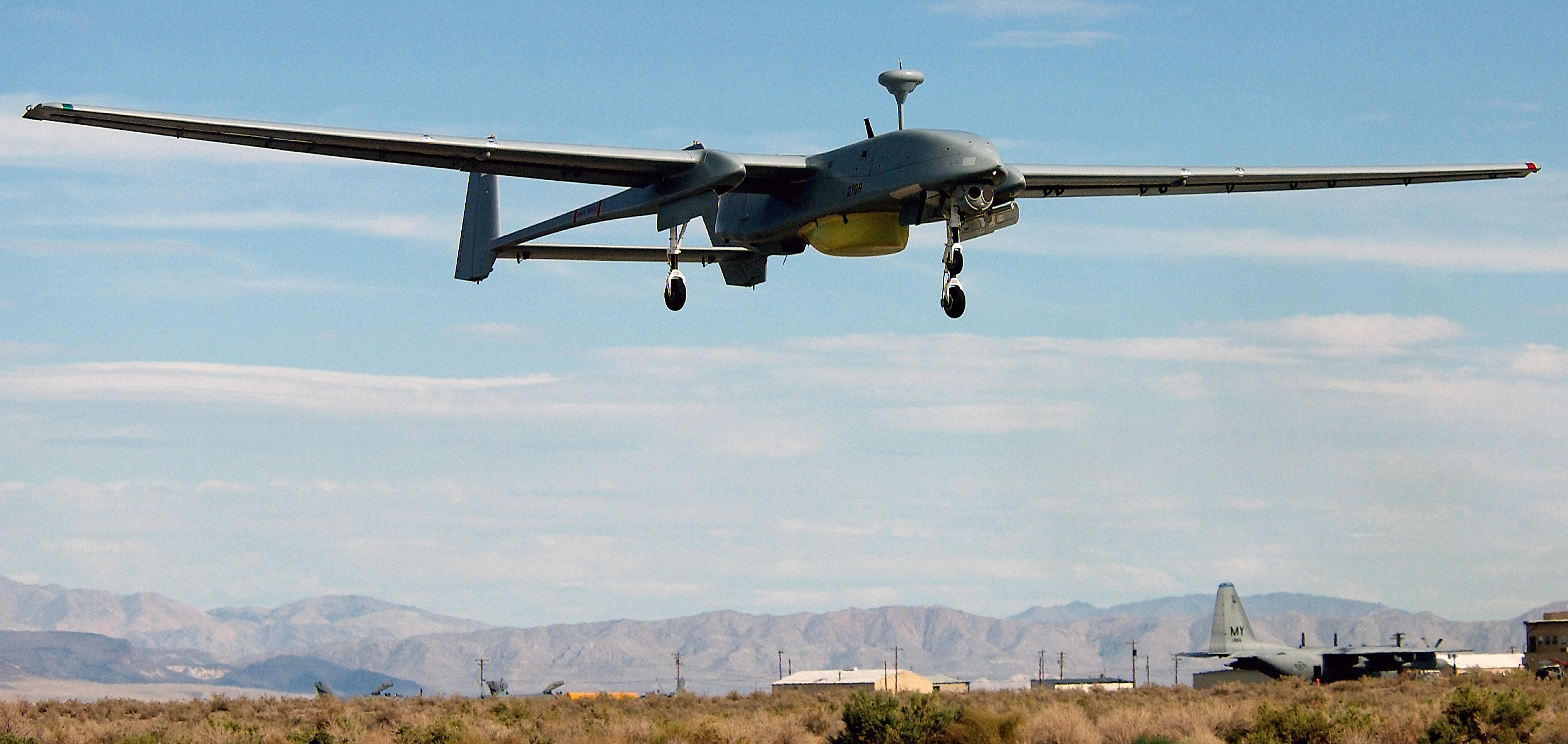
Photo: Heron 1 Drone , Creative Commons License

On October 5th 2017, the Center for Strategic and International Studies (CSIS), an international security policy research organization, hosted Sam Bendett, research analyst with the Center for Naval Analysis (CNA) for a discussion on Russian military robots. Bendett’s talk was primarily focused on developments in Russian military technology.

The increasing prevalence of military robots gives rise to concerns of international humanitarian law, such as discrimination and proportionality. Most notably, the ability to control military weapons remotely prevents transparency and makes it more difficult to hold perpetrators of war crimes accountable.

History of Military Robots in Russia

Bendett began the event by providing a summary of the history and current status of military robots in Russia. During the Cold War, the use of unmanned aerial vehicles (UAVs), more popularly known as “drones”, were used heavily. After the collapse of the Soviet Union in 1991, Russia’s defense sector was hit hard, which impacted UAVs as well.

Russia’s military technology is now behind many nations — including the United States, Israel, and China. As recently as 2008, Russia’s military was in the same condition as it was during the Cold War. A shift began around 2011-12 with Russia placing a greater emphasis on technological advance in the military. In 2014, Russian Defense Minister Sergey Shoygu announced that Russia planned to spend up to 9 billion USD on military robotic developments through 2020.

UAVs

Russia currently operates many UAVs. Most of the UAVs are small and simplistic and used for information gathering, observation, electronic warfare, communication, and target acquisition. Additionally, Russia has a number of mid-to-long range UAVS that are used primarily for targeting and have ranges of up to 120 kilometers.

An increase in interest in UAVS and support from the government has led to a recent resurgence of development of UAVs in Russia. Several programs of various levels of progress and sophistication are currently underway in Russia.

Russian UAVs in combat have already been observed in Ukraine and Syria. In Syria, these have primarily been used as target acquisition, frequently to increase precision of artillery strikes. Russia has reported an increased effectiveness as a result of the use of UAVs in combat.

1) Ukrainian forces have responded by turning to United States-supplied drones.  
2) The United States has previously aided Ukraine by supplying drones for self-defense. Whether this will continue under the Trump administration, which seeks to improve ties with Russia, is unclear.
3) Ukraine has responded to this threat with attempts to improve its own UAVs. These have been complicated due to high purchase costs and a corrupt government. Ukraine is instead turning to innovative solutions, including a public crowd-funding project to purchase UAVs and a crowd-funded start-up that aims to build new UAVS.

Unmanned Underwater Vehicle

Unmanned Underwater Vehicles (UUVs) are becoming more prevalent as Russia has placed an emphasis on arctic exploration. Russia is aiming to increase its maritime capabilities so that its technology can move farther from shore and deeper. 

Although Russia does possess UUV technology, it is primarily international.  There is now an attempt to replace these with domestic models in the next several years. Most of the technology is in the testing and evaluation stages.

This technology includes UUVs that can be used for surveillance, search and rescue duties lasting up to 6-9 months, and repair services. Additionally, a drone that can imitate and re-produce enemy vessels’ fields is being developed.

There is also development of a nuclear capable submarine. Last year, a nuclear submarine that posed a threat to US harbors and ports was tested, but little information has arisen since.

Other technologies

Other technologies being developed include a virtual battlefield to test military robotics and drones, an incredibly powerful computer that will be able to control air and sea military robots, and unmanned ground vehicles.

The Future of Russian Military Technologies

For many years, Russian military technologies were developed by a number of different and uncoordinated organizations. In recent years, this has changed as Russia aims to streamline its development. In 2014, the Minister of Defense established the Creation of Perspective Military Robotics Program and formed a commission for the development of robotics. In 2016, Russia also launched an annual conference called the Robotization of the Armed Forces of the Russian Federation.

Russia is working with a number of organizations, including research institutes and higher education entities, to create a uniform approach to military development and set a framework for research and developments to be undertaken. By drawing upon the nation’s industrial, technological, and intellectual potential, Russia is working towards creating a completely new armed force that will be able to further advance Russian foreign policy goals on an international scale. As President Putin recently declared — “Whoever masters [artificial intelligence] will get to rule the world”.

Should readers wish to view Sam Bendett’s talk in full, an online recording can be found here.

By Molly Kirwan

 
The law of armed conflict became a more complicated realm during 2016. The ever-increasing prevalence of hybrid warfare, which refers to conflicts that blend conventional and irregular tactics, led some to argue that the Geneva Convention needs to be updated to address issues of warfare in the world of today. The ongoing refugee crisis has reinforced the international focus on protecting those affected by armed conflict with respect to international human rights laws and standards.

The effectiveness and relevance of the Geneva Conventions has been called into question. The Geneva Conventions were agreed upon in 1949, and two Additional Protocols were added in 1977. However, there have been no major updates since that time despite forty years having passed. Given the evolution of armed conflict from traditional, between two states, to hybrid, between a state and a non-state actor, it is widely argued that updates ought to be made.

In May, the World Humanitarian Summit took place in Istanbul, setting many goals and creating many action plans to protect those affected by conflict across the globe. The most relevant to the law of war is the goal to “uphold the norms that safeguard humanity,” largely reiterating parts of the Geneva Convention. The goal purports that respecting the law of war should include
  1. Upholding the “cardinal rules,” such as the fundamental rules of distinction and proportionality, which are mandated by the 1977 Additional Protocols. 
  2. Ending the targeting of hospitals, schools, and places of worship, and allowing impartial actors to engage in dialogue with those in conflict.
  3. Refraining from bombing and shelling populated areas, specifying the end of weapons with intentionally indiscriminate effects.
  4. Meeting the essential needs of people.
  5. Respecting and protecting humanitarian medical missions.
In March, the International Criminal Tribunal for the Former Yugoslavia convicted Radovan Karadžić of genocide, crimes against humanity, and violations of the laws or customs of war regarding the role he played in the conflict in Bosnia and Herzegovina from 1992 to 1995. He was sentenced to forty years in prison.

The definition of a “war crime” is broadening as well, with Ahmad al-Faqi al-Mahdi being the first person sentenced to prison for cultural heritage crimes as a stand-alone crime. There is growing concern on the issue of prosecuting cultural heritage crimes due to the fact that similar crimes are occurring in countries where the International Criminal Court (ICC) does not have jurisdiction, such as Yemen, Iraq, and Syria. Thus, the ICC cannot act in those countries without a specific mandate from the UN Security Council, which is unlikely to happen given the current dynamics of the permanent five members. This is despite the fact that the ICC President called for participation of States in the Court to be “maintained and enlarged” in October.

After Al-Mahdi admitted to destroying shrines in Timbuktu in the summer of 2012, he was arrested in Niger in 2014, and the ICC sentenced him to nine years in prison this past September. According to the New York Times, the case has “put a new focus on cultural destruction as a war crime, or as a crime against humanity,” at a time when “international law must address deliberate attacks on a people’s heritage when they are an intrinsic part of warfare.”