Showing posts with label European Union. Show all posts
By Xiaoyi Wang

Picture: Globe License: Public Domain

In 2017, because of the changes in administration, environmental enforcement policies around the world have changed.
United States of America
In the United States, the Trump Administration has brought uncertainty to the US enforcement picture. All enforcement constituencies (state agencies and environmental groups) are still assessing what roles and strategies to take as directional shifts at the federal level will likely influence responses by states and NGOs. The shift of administration led to EPA enforcement moving back to the "traditional" environmental programs – air, water, waste.
European Union
The European Commission has conducted a broad EU Environmental implementation review (EIR). The EU also adopted new rules (Dec. 2016) for member states to reduce air pollution by primary particulate matter, sulphur dioxide, nitrogen oxides, ammonia and volatile organic components. In addition, the EU has set out environmental plans and proposed initiatives to achieve their 2020 goals.
China
China has implanted tougher environmental policies in 2017, a great expansion under President Xi’s “War on Pollution” initiative. In 2017, China also shut 27 coal mines in Shanxi and shutdown responsible corporate actors around China to control air pollution.
The Paris Climate Agreement
The Paris Agreement is an agreement within the United Nations Framework Convention on Climate Change (UNFCCC) dealing with greenhouse gas emissions mitigation, adaptation and finance starting in the year 2020. President Trump announced in June that the United States will withdraw from the Paris Agreement. The Trump administration has made it abundantly clear that fighting climate change is, at best, a low priority.  Many are unsure whether the Paris Agreement framework will still work if the United States indeed withdraws from the agreement. In accordance with Article 28 of the Paris Agreement, the earliest possible effective withdrawal date by the United States cannot be before November 4, 2020, four years after the Agreement came into effect in the United States and one day after the 2020 U.S. presidential election.
The Montreal Protocol on Substances that Deplete the Ozone Layer (the Montreal Protocol)
The Montreal Protocol celebrated its thirty years on September 16, 2017. After thirty years of enforcement, the treaty has been ratified or accepted by all 197 UN member states. As one of the most successful and effective environmental treaties ever negotiated and implemented, the Montreal Protocol has helped reduce the depletion of the ozone layer by about 20 percent from 2005 to 2016.

By Cameron Peek


stock photo, money, leaves, map, out, financial, european, euro, union, crisis, referendum, european-union, brexit, euroescepticism
Photo: Brexit Text License: Editorial Use OK

Following the conclusion of phase one (“the divorce”) of the Brexit negotiations last December, the United Kingdom and the European Union have officially entered phase two of the negotiations, discussing the framework for the UK-EU future relationship and deciding the arrangements necessary during the period transitioning to that relationship. Frustrated that the discussions have produced few concrete ideas of what this future relationship would look like, two weeks ago the EU’s chief negotiator, Michel Barnier, told UK leaders that the time had come to make a choice — will the UK be in or out of the EU customs union? Responding to growing concern within the Conservative Party that she might bend to opposition pressure, last week UK Prime Minister Theresa May made her position clear; the UK will “categorically [be] leaving the customs union.”

A Refresher on Customs Unions

A customs union is a type of trading block that unifies the tariff policy of all members. Customs unions are defined by two key features: 1) a free trade area between members (members do not charge duties on goods imported from other members) and 2) a common external tariff (any goods imported from non-member countries are charged the same import tariff, regardless of which member country the goods enter the union). Here, we should distinguish the EU customs union from the EU single market. The customs union unifies external tariffs, but the single market is what allows the free flow of goods, services, people, and capital. Thus, it is possible to be in the single market, but not the customs union (like Iceland, Liechtenstein, Norway and Switzerland), or be in the customs union, but not the single market (like Andorra, San Marino and Turkey).

May’s Position and the Way Forward

Leaving the customs union risks seriously disrupting the lion’s share of UK trade. The EU is the UK’s largest trading partner, comprising 43% of all UK exports and 54% of all UK imports. Exiting the customs union will put up new tariff barriers, depriving UK-EU traders of the duty-free access they currently enjoy. On the other hand, leaving the customs union would allow the UK to escape the confines of the common external tariff, thereby making it possible for the UK to implement its own tariff policy and negotiate its own trade agreements with non-EU members. As the EU itself has recognized that 90% of global growth is expected to come from outside the EU, this could be a worthwhile tradeoff for the UK.

Still, May is holding on to hopes of both having her trade cake and eating it too. In August of last year, May’s trade team released a “future partnership paper” outlining what is still the UK’s stance for negotiating the future UK-EU trade relationship. Most notable from the paper was the proposition of a “customs partnership.” Under this scheme, the UK proposed that it would synchronize its import policies for intermediary goods brought into the UK that are part of a supply chain for final consumption in the EU. Thus, for American widgets meant to be consumed in the UK, the UK could charge x%; but if those same American widgets were to be used in other products that would eventually be shipped to the EU, the UK would be charge the EU rate, y%.
Unfortunately for May, EU officials are underwhelmed at the idea, calling the UK’s proposal for a customs arrangement “unrealistic.” Even more doubtful is whether such an arrangement would comply the WTO’s non-discrimination principles. As the negotiations proceed, the UK will need to be warry not to compromise its obligations to the world trading system in the hopes of maintaining current access to the EU market.
By Laurie Morgan*

On October First, Catalans voted in favor of independence from Spain by a large majority in an unofficial referendum. Those in favor of a Catalan state have cited a right to self-determination as their legal basis to act.

Article 1 of the International Covenant on Civil and Political Rights (ICCPR), which Spain is party to, describes this right as held by “all peoples” to “freely determine their political status and freely pursue their economic, social, and cultural development.” United Nations General Assembly Resolution 1514 further elaborates on this description, and states: “[a]ny attempt aimed at the partial or total disruption of the national unity and the territorial integrity of a country is incompatible with the purposes and principles of the Charter of the United Nations.” This commentary discusses whether the right to self-determination can include a right to independence despite tension with this principle of state sovereignty, and whether either right is legally and practically applicable to Catalonia.

Generally, it is agreed that the Catalans can be considered a people, and therefore subject to the right of self-determination. While there is no codified definition for a people in international law, the Permanent Court of International Justice, and later the International Court of Justice (ICJ) have expressed that the following shared characteristics have importance in determining whether a group should be considered a people: race, religion, language, heritage; and a sense of unity by the identity of these factors. Although Catalans share a dominant race and religion with their Spanish counterparts, Catalans find unity in their own language and a heritage unique from Spanish heritage.
While the right to self-determination encompasses a right to free determination of political status, this does not automatically permit a people to unilaterally establish an independent state.

In its decision on the self-determination of Quebec, the Canadian Supreme Court interpreted a distinction between internal and external self-determination. According to the Canadian Supreme Court, internal self-determination is the norm under international law, while external self-determination, which would allow the potential to assert a right to unilateral secession, is only available for the most extreme of circumstances.

This distinction, of course, begs the question: what are extreme circumstances? The ICJ has shed light on this issue in its Kosovo opinion, which stated “the international law of self-determination developed in such a way as to create a right to independence for the peoples of non-self-governing territories and peoples subject to alien subjugation, domination and exploitation [emphasis added].”
On one hand, Catalonia, like all other Spanish states, has long held a self-governing status with Spain so it may not fall completely under the realm of complete non-self-governance. However, Spain’s invocation of Article 155 of the Spanish Constitution, which permits the national government to “take all measures necessary” in limiting the autonomy of the self-governing states to protect the “general interest of Spain,” has certainly enhanced the quality of the argument of the Catalans seeking independence, who emphasize the difference between their semi-autonomy and the complete autonomy they seek. 

Still, in practice, peoples subject to non-self-governance or alien subjugation have not always been able to utilize a right to self-determination to enforce an alleged right to unilateral independence. Realistically, Catalans seeking freedom from alleged alien subjugation, domination, and exploitation have existing, legal options aside of independence to solve these problems, some of which may be better suited to the interests of independence-oriented Catalans.

For example, victims of the police brutality which occurred on the day of the referendum have sought domestic judicial remedies. If victims of human rights violations by the state of Spain satisfy all domestic judicial remedies, they are entitled to seek justice from the European Court of Human Rights.

Additionally, remaining part of Spain may better suit the interests of Catalans. If economic development is the independence movement’s foremost goal, independence would be disastrous for Catalonia. Both the European Union and the European Free Trade Area require unanimous agreement of existing parties to initiate a new state. It is unlikely that Spain would look favorably upon the entrance of an independent Catalan state into these agreements, especially because it would do nothing to deter other Spanish states from looking to secede.

Other Catalans seek independence for social and cultural reasons notwithstanding the potential economic blow Catalonia would need to take. This faction recognizes that independence would not necessarily solve their perceived social and cultural problems, but believes that a chance at restructuring their governmental system would be worth the substantial economic risk.

Looking forward, relying on the right to self-determination could work for Catalans, but the existence of domestic and international avenues for the resolution of issues of subjugation and exploitation indicate that, in this case, it would be difficult for this right to effectively override the principle of state sovereignty. The recent success of the pro-independence parties in the Catalan parliamentary election indicate that this issue is far from resolved. 

*Laurie Morgan is a first year law student at Georgetown University Law Center.
By Eric Olson


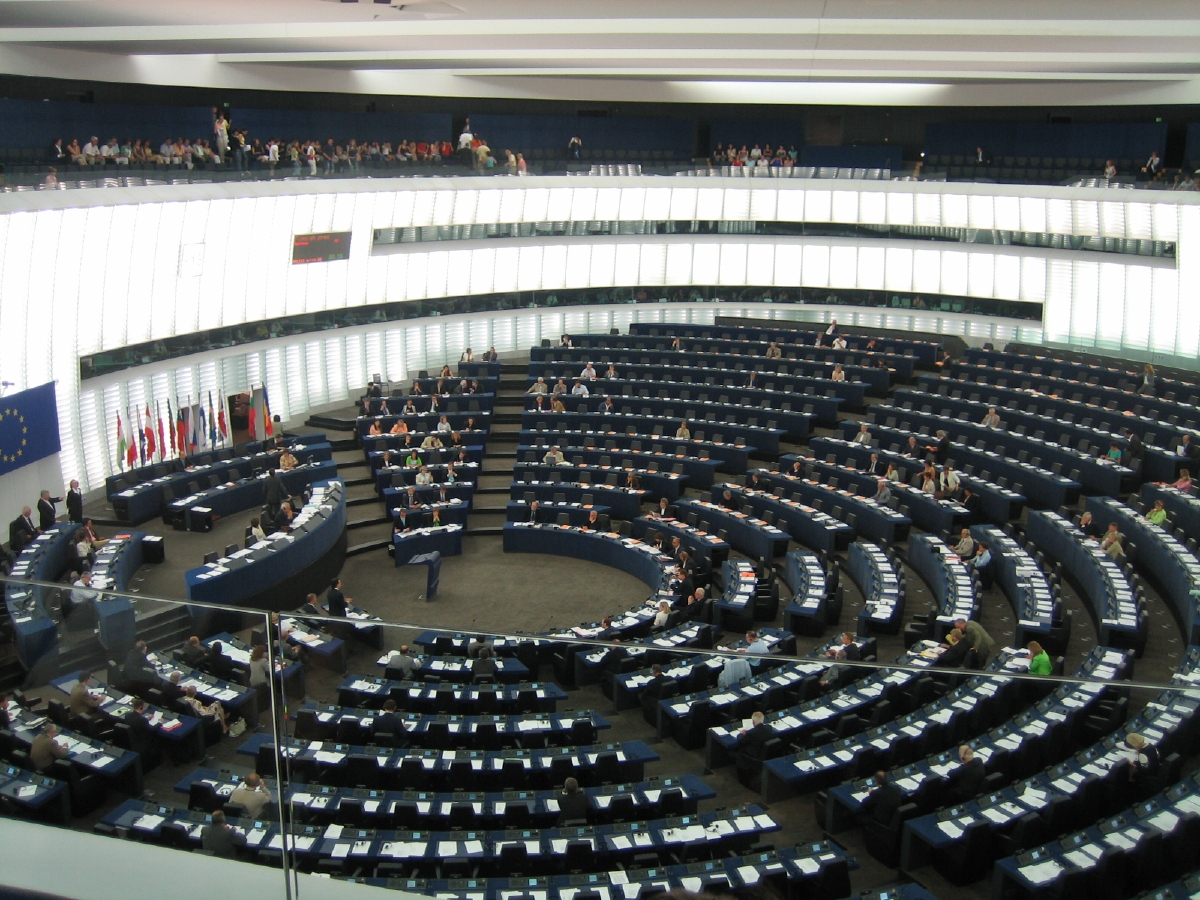
EP_Strasbourg_hemicycle_l-gal.jpg

European market watchers nervously anticipate the effects of the second Market in Financial Instruments Directive (MiFID II), the newest iteration of European Union investment services regulations. Called the European Union’s “most ambitious, yet controversial, packages of financial reform” by the Financial Times, MiFID II applies to European Union member states plus Iceland, Liechtenstein, and Norway starting on 3 January 2018.

The original MiFID took effect in September 2007 with the aim of increasing the competitiveness of the European markets through uniform controls, ultimately fostering the development of a European single market. The launch of MiFID, however, unluckily coincided with the onset of the financial crisis, the effects of which underscored the shortcomings of the regulations. Because MiFID I primarily focused on equities markets, the regulations were ill-equipped to handle the systemic pressures caused by the 2007 crisis.

In October 2011, the European Union began the process of revising MiFID I, spending the next two years debating various proposals and approving the final version of the regulations in 2014. Although MiFID II was originally set to take effect in 2017, in October 2015, the European Securities and Market Authority (ESMA) - the regulators in charge of MiFID II implementation - announced that due to the technical challenges of such a large-scale implementation, they would not be ready for a 2017 MiFID II launch. Because the law did not contain enough detailed guidance, the European Union delayed implementation by a year so ESMA could produce technical implementation standards.

MiFID II’s changes to investment regulation touch practically every aspect of investing. One of the largest changes in MiFID II is a shift from phone trading to electronic trading in order create a reliable record of trade transactions. For example, trades will now be timestamped to the millisecond, and traders must keep this data on file for at least five years. MiFID II also imposes new regulations on research data used by asset managers to make investments. Previously, traders received data for free, imposing the research costs on their clients through trading fees. Now, traders must budget for trading and research separately, with the goal of providing clients a research trail that allows them to evaluate the efficacy of their asset managers.

Proponents of MiFID II argue that the regulations will achieve their goals of increased transparency, while also creating uniform, efficient market structures. However, financial analysts fear that the wide-reaching regulations could negatively disrupt the market. Regardless of one's opinion, to prepare, market traders must effectively understand how the 1.4 million paragraphs of new rules will affect their work in the European financial markets.

Importantly, non-European traders must also carefully examine the new regulations because any European investments and research data could fall under the purview of the MiFID II regulations. U.S.-based firms especially should heed any guidance the SEC, which has the power to waive some MiFID II rules (such as the prohibitions on direct payment for research) as applied to U.S. traders. On 26 October 2017, the SEC issued three letters providing temporary guidance to financial markets investors detailing how the MiFID II regulations apply to U.S. investors, promising permanent guidance regarding the regulations in thirty months. The SEC, and the global financial sector as a whole, will surely be watching Europe closely after MiFID II’s commencement in early January 2018 to see the positive or negative effects of MiFID II on the market.
By Trevor Schmitt


On October 4-6th, 2017, The George Washington University Law School hosted the 3rd annual Privacy + Security Forum. The event, organized by GW Law’s Daniel Solove and Berkeley’s Paul Schwartz, is a veritable who’s who of the global privacy and data protection law landscape with hundreds of speakers addressing a range of topics. As with any privacy and data protection event held in the last five years, the General Data Protection Regulation (“GDPR”) was a primary focus of panel discussions.

For those unfamiliar with the massive European Union (“EU”) regulation, the GDPR is a privacy and data protection law going into effect May, 2018. As a replacement for the EU’s current data protection law, the GDPR regulates the collection, use, and storage of personal information related to individuals in the EU. Key to this regulation is its inclusion of non-EU organizations that offer goods or services to individuals in the EU. This means that organization with any identifiable information related to individuals in the EU should be worried about the GDPR. And with fines up to €20 million or 4 percent of global annual turnover (whichever is higher) for non-compliance, that concern seems justified.

The event continued many of the ongoing conversations relating to issues involved in private sector efforts toward compliance. But that’s not all. Among these issues several overarching themes rose above the normal fray of navigating technical GDPR compliance. Those charged with conforming to the GDPR should be aware of these emerging perspectives: 

“Do what you say. Say what you do. Be able to prove it.” This quote, brought to light by Constantine Karbaliotis, exemplifies the need for entities regulated by the GDPR to provide extensive documentation of their compliance efforts. Doing the right thing is great. But show your work. Not being able to prove compliance with the GDPR is just as damaging as not being compliant at all.

The GDPR is not going away. May 2018 marks the beginning—not the end—of GDPR compliance. The regulation contains a myriad of requirements associated with individual personal information that fundamentally changes how technology will operate. These include the right to erasure (to have one’s data deleted from an entire system), data portability (to move data from one service to another), and privacy by design (keeping privacy involved in every step of engineering data systems) to name a few. Many organizations will need to overhaul their systems to become compliant. These provisions, as well as others contained in the GDPR, promise a transformation of how technology will handle personal data on a global scale.

The most obvious nails will be hammered first. The governmental organizations (Data Protection Authorities) charged with GDPR enforcement have limited resources. They cannot investigate every organization who handles EU personal data. So unless an organization falls into the spotlight realm of GAFA (Google, Apple, Facebook, Amazon), chances are it will not be an initial target of investigation. This leeway, however, only goes so far. Outdated privacy policies, overt non-compliance indicators, and massive data breaches will raise flags to regulators that an organization may not be compliant.

Brexit might leave the UK out in the cold. As of March 29th, 2019, the United Kingdom (“UK”) will no longer be part of the EU. This means that the UK will become a third country according the the GDPR. Under the GDPR, third countries must undergo a verification process to determine if municipal data laws provide adequate protection for handling personal data related to individuals in the EU. And while lawmakers have announced their intention to adopt an almost exact copy of GDPR regulations, the former EU State must still apply for adequacy following its official exit from the EU. These means that, at least for a time, the UK will not have free flowing data from the EU.


Despite these additional perspectives on the global concerns over GDPR compliance, much is still unknown about how the regulation will impact organizations at scale. What is clear, however, is that organizations who want continued access to EU markets must be compliant or face potentially debilitating fines. These issues will continue to be explored in the Privacy + Security Forum’s internationally-focused sister event early next year. 

By Nicholas Nalbantian 


Pre-Brexit
Prior to the decision to leave the European Union, David Cameron, then the Prime Minister of the United Kingdom, attempted something new in EU politics. In January 2013 Cameron promised to negotiate a “new settlement” with the EU, including winning an array of concessions from Brussels in order to convince the British people to remain in a reformed EU. On February 20, 2016, Cameron finalized a deal with the (now dubbed) EU-27 who, even at the time, seemed incredulous of the idea that a state would leave the EU. Nonetheless, Cameron managed to secure some changes for the UK, chiefly that bloc workers will be limited to “in-work” social welfare benefits for four years and a pledge that the UK will not be responsible for the maintenance of the Euro, the European common currency. Of existential significance, Cameron also got a pledge that the UK would be excluded from any commitment “to an ever closer union” and the introduction of a “red-card” mechanism to block EU Commission proposals that were not to Britain’s liking, provided 55% of national parliaments agree.
With the UK’s vote to leave, these concessions by the EU-27 will not be implemented. However, as anti-EU sentiment grows in Europe, it will be up to Brussels to consider whether Brexit could have been avoided if Cameron’s moves for reform had been taken more seriously. Although any future EU reform may be a forlorn hope as Guy Verhofstadt’s (leader of the Liberal MEPs) decision to make a deal with Antonio Tajani’s center-right European People’s Party (EPP), which won Tajani the presidency of the European Parliament. The EPP was the same political party in power from 2009 – 2011 during the fallout of the Great Recession. The EPP now controls all three leadership roles in the EU with Jean-Claude Juncker as President of the European Commission and Donald Tusk as President of the European Council. The text of the agreement between the EPP and the Liberals, both pro-EU parties, reads like a diagnosis that the remedy for the EU’s woes is “more Europe.” The move is also seen as a rebuke of Eurosceptics and Socialist parties who had hoped for greater dialogue on systemic EU reform.
Brexit
On June 23, 2016, the United Kingdom held a referendum to decide whether or not the country should remain a part of the European Union. In the early hours of the morning on June 24 2016, the results emerged as a 52% to 48% victory for the Leave campaign, Prime Minister David Cameron would resign later that same day. The 71.8% turnout for the referendum vote was the highest turnout experienced in a British election since 1992. In the wake of David Cameron’s resignation, Theresa May, the former Home Secretary and long-time Member of Parliament, became the second woman to serve as Prime Minister on July 13, 2016.
The referendum to leave the European Union would be the first time that a nation state has voted to leave the European Union, thereby reducing its membership to 27. While Greenland voted to leave in 1985, it also remained a member of the Kingdom of Denmark so its relations with the EU are more akin to European overseas territories, like French Polynesia, than a true withdrawal. With the EU often described as the pinnacle of multinational integration, the significance of the UK’s decision to quit the bloc cannot be overstated. 
Un-United Kingdom
An almost immediate consequence of the Brexit vote, aside the falling value of the pound, was the threat to the relationship of the UK states. On October 2, 2016, the Belfast High Court heard legal challenges whether the UK Government needs the consent of the Northern Irish Assembly to leave the EU, it was rejected. In a similar vein, Nicola Sturgeon, First Minister of Scotland, announces that a second Scottish Independence referendum is likely by 2020, if not earlier. Perhaps most damaging of all is the threat to the Good Friday Agreement, with the Brexit vote splitting along sectarian lines, with 85% of Catholics voting remain, and the unsettled issue of the open border between Northern Ireland and the Republic of Ireland. 
Spilling into 2017
With little consideration for “Years in Review,” the events of Brexit continued into this year and it would be inaccurate not to mention some of the more recent developments. The UK High Court, one of the Senior Courts of England and Wales, rule in November that the May government could not invoke Article 50 of the Lisbon Treaty without Parliament’s consent. The UK Supreme Court confirmed that decision in January. Despite some difficulties with the House of Lords, Parliament has now authorized Prime Minister May to invoke Article 50. As of printing, May is expected to trigger Article 50 on Wednesday, 29 March, but with elections soon European officials suggest formal talks won’t start until June.
By Jose Corte-Real


The Future Model for European Trade Deals?

After seven years of negotiations, the landmark Comprehensive Economic and Trade Agreement (CETA) was signed on October 30, 2016. The agreement, which has been touted as a major success for the future of EU trade deals, has also been the target of criticism and protests. With approval from the European Parliament and the Canadian Parliament, 90% of the deal will be able to take effect, leaving the rest of the deal to be ratified and implemented by each of the twenty-eight member states’ national legislatures.

The deal purports to remove 98% of tariffs between Canada and the EU, and officials hope it will generate a €10.9 billion ($14.3 billion Canadian) increase in trade worth. Further, EU exporters are estimated to save €500 million in duties annually, and there will be mutual recognition in regulated professions such as architecture, accounting, and engineering and easier transfers of company staff and other professionals between the EU and Canada. The European Commission also hopes CETA will create a more level playing field between Canada and the EU on intellectual property rights and strengthen the protection and enforcement of copyrights. “Canadians and Europeans share the understanding that in order for real and meaningful economic growth, we need to create more good, well-paying jobs for our citizens. Progressive trade agreements like the one signed today, will do just that,” Trudeau said, shortly after signing the landmark deal.

European Commission President Jean-Claude Juncker referred to a “new chapter” in relations between Canada and the EU, hoping this deal will open new opportunities for the millions of workers seeking them on both sides of the Atlantic.

The seven years of negotiations between each of the EU member states and Canada were left hanging in the balance as Wallonia, Belgium’s southern French speaking region with a population of 3.6 million people voted to veto the agreement just a few days before the deal was due to be signed. Because all twenty-eight EU states had to agree on the deal before it Trudeau could sign it, Belgium’s veto almost pushed back the long-awaited deal yet again. Belgium was the lone holdout to signing the deal because its regions can veto international treaties. The protestors were fearful of an investor-state dispute mechanism provision and sought safeguards for labor, environmental and consumer standards, and more protection for Walloon farmers who believe they will face increased competition from Canadian imports. In order for the deal to move forward, a last minute addendum was added addressing the regional concerns.

Further criticisms of the deal include that it will weaken European consumer rights protections, including those concerning food safety, and that tariffs are already low and do not need lowering. The deal has also been criticized as being beneficial only to big business and multinational corporations while risking net-losses, unemployment, and environmental damage that might impact individual citizens. These criticisms seem to highlight how hard it is to get free trade agreements done in a multifaceted and multicultural economy such as the EU’s. CETA also brought up a lot of talk in Brussels regarding finding a new consensus on trade. Whatever this consensus is, it will be very relevant to how the EU approaches Brexit negotiations.

A Potential Model for Post-Brexit Relations with the UK?

Many of the British leaders who advocated a leave vote during the Brexit campaign pointed to Norway and Switzerland’s relationship with the EU as a model to aspire to. However, the CETA model may be significantly more appealing. Norway and Switzerland’s access to the European Union single market comes at a steep price. Both countries sign up for most EU regulations, accept the free movement of EU workers, and make payments into the EU budget. CETA seemingly will give Canada access to the EU single market without the obligations faced by Norway and Switzerland. However, some Brexit proponents still have apprehensions about using CETA as a viable model for a trade deal with the EU.

CETA’s removal of tariffs does not include some sensitive food items such as eggs and chicken. Further, the EU will still require Canada to comply with its rules of origin, which oblige non-EU states to undergo rigorous customs checks. Because of these customs requirements, Canadian exporters are expected to face extra costs in order to prove their goods are “made in Canada.”

Finally, the service industry, which makes up about 80% of the United Kingdom’s economy are only partially covered by CETA. Thus, although CETA could be a good starting model for discussions with the EU, it is expected that a trade deal between the UK and the EU would have to be significantly more comprehensive in order to deal with the intricate web of ties that currently link the UK and the EU.

How CETA Will Affect the Legal Landscape of Investor-State Disputes

A lot of debate has revolved around an investor-state dispute settlement mechanism included in the deal through which a permanent arbitration tribunal is to be established. This tribunal, which will settle disputes between companies and governments, has been controversial, with many protestors claiming it gives too much power to big multinationals at the expense of consumers and workers. Amongst other criticisms, critics allege that the investor-state dispute settlement provisions will allow U.S. companies to engage EU states in arbitration through Canadian subsidiaries.

Section 4 of CETA provides investment protection to foreign investors and guarantees a “fair and equitable treatment and full protection and security.” CETA will allow foreign corporations to sue states before arbitral tribunals if they claim to have suffered losses because a state violated its Non Discriminatory Treatment obligations (which can be found in section 3 of CETA) or because of a violation of the guaranteed investment protection.

Such investor-state arbitrations are not necessarily new under public international law, but for transatlantic trade and investment, the comprehensiveness of this parallel model of justice is new. In addressing fears of confidentiality of arbitral proceedings, CETA provides transparency by adopting the UNCITRAL Rules on Transparency in Treaty-based Investor-State Arbitration.
The tribunal will consist of fifteen members named by Canada and the EU, dealing with individual cases in panels of three, and an appeals mechanism will be established to ensure “legal correctness” of the awards. Further, the tribunal’s members will not be allowed to appear as experts or party counsel in other investor-state disputes.

These investor tribunals  are not a guaranteed part of CETA, and each national legislature will have to ratify them individually. For example, Belgium’s opposition to the court suggests that it might never be enacted there, meaning Canadian companies will not be able to use the arbitration tribunal to sue Belgium over policies that negatively affect their investments. This could serve as a model for other countries that worry this provision unduly gives too much power to corporations.

Moving Forward

Supporters of the deal say that it will create more than one million jobs, with the European Commission saying the deal will be worth €545 to each European citizen every year. Opponents are angry that CETA meetings were held in secret and fear that the deal has given too much power to corporations by making it easier for them to sue governments. However, only time will tell if this deal will boost the stagnant economies of these two global markets and serve as a viable model for the future of EU trade deals.