Showing posts with label technology. Show all posts
By Craig Tarasoff

The International Trade Commission launched an investigation into claims from Ericsson that the iPhone and iPad infringed on up to 41 of its technology patents. The disputes between these two companies go back to 2008 when a licensing agreement expired. A new agreement on the patents was never reached. Apple filed a complaint alleging Ericsson was demanding excessive royalties. According to Macrumors, if the ITC finds that Apple infringed on the patents, it could prevent the products from being sold in the US until the case is resolved.
By Kristen McCannon

The Office of the U.S. Trade Representative (USTR) voiced concerns earlier this month about an Indonesian law requiring the use of local content in the production of smartphones. Only about one third of Indonesians own a smartphone, making Indonesia a potentially lucrative untapped market for Western technology companies such as Apple. However, USTR argued that Indonesia lacks a sufficient supply chain to produce high-quality devices with local content as required under the current law, hindering the ability of those companies to sell their products.
By Nathaniel DeLucia

The Chinese government recently announced a new policy aimed at limiting their dependence on foreign technology.  The policy will require all Chinese banks to turn over the source code for all the various software and technology the banks may utilize.  The idea is to identify foreign source code and replace them with local software products.  This comes as part of a larger plan to eliminate foreign technology from banks, state-owned enterprises and the military by 2020.  If the policy succeeds, U.S. companies may not be able to sell their software products to these lucrative industries.


For the complete story, check out Bloomberg News.
By Derek Hunter

Friday, September 19 stood to be the day when the biggest IPO in history went off, but this mega-tech company does not hail from Silicon Valley, and you probably have never used it. Alibaba is a Chinese E-bay-like service where small businesses and individuals can use its platform to buy and sell goods and services. Alibaba is breaking all the rules for its debut: as a tech company, it is listing on the NYSE, instead of the Nasdaq; it is allowing retail investors to buy shares on the first day (unlike Facebook or Twitter on their first day); and it is a Chinese company that eschewed Shanghai or Hong Kong for its opening.

Fortune Magazine provides a good overview of this historic IPO, which is projected to value Alibaba at $168 billion (with a “b”).
By Phillip Yu

Sihai Cheng of China and Seyed Abolfazl Shahab Jamili of Iran allegedly plotted between 2009 and 2011 to send transducers ordered from MKS Instruments Inc. in Andover, Massachusetts, to Eyvaz Technic Manufacturing Co., a Tehran-based business that has previously supplied parts to Iranian nuclear facilities. 

Cheng allegedly plotted with coconspirators at MKS Shanghai, a Chinese subsidiary of MKS in Andover to set up companies to pose as the intended recipients of the materials. Cheng then allegedly redirected the materials to Iran once they were shipped to China. 

While Iran urges that its nuclear program is for peaceful purposes, Cheng’s indictment maintains that currently U.S. sanctions ban the export of any goods, technology, or services from the United States to Iran. 

By Min Wu

The European Parliament approved amendments to a telecommunications legislation package that would solidify net neutrality, according to Wired. The legislation still needs the approval of the Council of the European Union to become the law. 

Net neutrality is the notion that all traffic on the Internet should be treated equally by network service providers, without discrimination. The amendments prevent companies from arbitrarily defining services as “specialized services” to evade the net neutrality requirement. In the United States, net neutrality rules adopted by the Federal Communications Commission were struck down earlier this year.
By Matt Klinger

According to a recent New York Times article, scientists are busily at work attempting to resurrect the passenger pigeon from extinction.  More than a billion of the birds once populated the eastern United States, but the last one died in 1914.

Scientists are now sequencing passenger pigeon DNA and developing elaborate plans to recreate the bird's cells, introduce them into an existing type of pigeon, breed the offspring, and eventually train the resulting passenger pigeon-like birds to behave as their "ancestors" did.  With any luck, scientists believe a new population of passenger pigeons could be self-perpetuating by 2060.  

The prospect may seem far-fetched but at least one animal has already been brought back from extinction, even if only briefly.  The possibility of re-creating dead species has some envisioning Jurassic Park-like scenarios where woolly mammoths again roam Siberia.  But, as Stanford Law professors Jacob S. Sherkow and Hank Greely note, the issue raises a host of legal questions.  For instance, could de-extinct species be patented?  Would they be "endangered?" And what regulations, domestic and international, should be in place to govern the process? 
By Min Wu

The European Patent Office (EPO) published a decision rejecting an attempt to patent human foreskin cells suitable for culturing stem cells, according to IP-Watch. The EPO said in its decision that inventions using human embryonic stem cell lines derived from the destruction of the human embryos are not patentable under the European Patent Convention.

In 2011, the European Court of Justice (ECJ) ruled that no patents may be issued on stem cell research if human embryos have been destroyed in the process. Although the ruling is not binding on the EPO, the EPO observed that its decision is consistent with the ECJ ruling.
By Elizabeth Gibson*

The U.S. State Department has just rolled out a new policy that should help reduce a rare form of statelessness caused by a conflict of laws related to Assisted Reproductive Technology (ART).

Technologies designed to help infertile couples have children have greatly improved over the past few decades. The use of egg and sperm donors as well as gestational surrogates has become increasingly common, and last month nine Swedish women made headlines for receiving womb transplants.

However, the law has often struggled to keep pace with the evolving definition of what it means to be a mother or father, especially as couples travel across borders in search of cheaper or newer procedures. In some cases, couples have used Assisted Reproductive Technology overseas only to later be told that they cannot take their newborn home because conflicting laws say the child is not their own or does not qualify for citizenship in their home country.
By Min Wu

Apple has been seeking a trademark for “App Store” in Australia since the launch of its App Store service in 2008. According to ZDNet, the Federal Court in Sydney held a hearing to resolve the dispute between Apple and the Registrar of Trade Marks of Australia.

In the hearing, Apple attempted to show that the term has been inherently associated with its service by the public since 2008. To refute Apple’s position, the Registrar noted that “appstore” was registered as the trademark of another U.S. company well before the 2008 launch of Apple’s App Store.
By Matt Klinger

In response to concerns about government surveillance, the Internet Engineering Task Force (IETF), which develops technical standards for the internet, is working on a plan to expand the use of encryption on the web.  Most web traffic today is exchanged under the hyper text transfer protocol (HTTP), an unencrypted medium.  Some sites, however, like banks, online retailers, and Gmail, use HTTPS, which incorporates encryption into the exchange.  The IETF hopes to produce a standard by the end of 2014 that encourages the use of HTTPS for all web traffic, although adoption by websites would not be mandatory.

Salon reports the IETF is also looking into make anonymous surfing of the web easier by expanding the use of Tor - a networking software that anonymizes web traffic.  Journalists, activists, and others across the globe use Tor to protect their communications.  Meanwhile, the U.S. National Security Agency and its British counterpart seem intent on cracking the software.  Ironically, Tor's precursors were developed by the U.S. Department of Defense to safeguard its communications and the U.S. government reportedly still funds around 60 percent of Tor's development tab.
By Peter Andres*
 
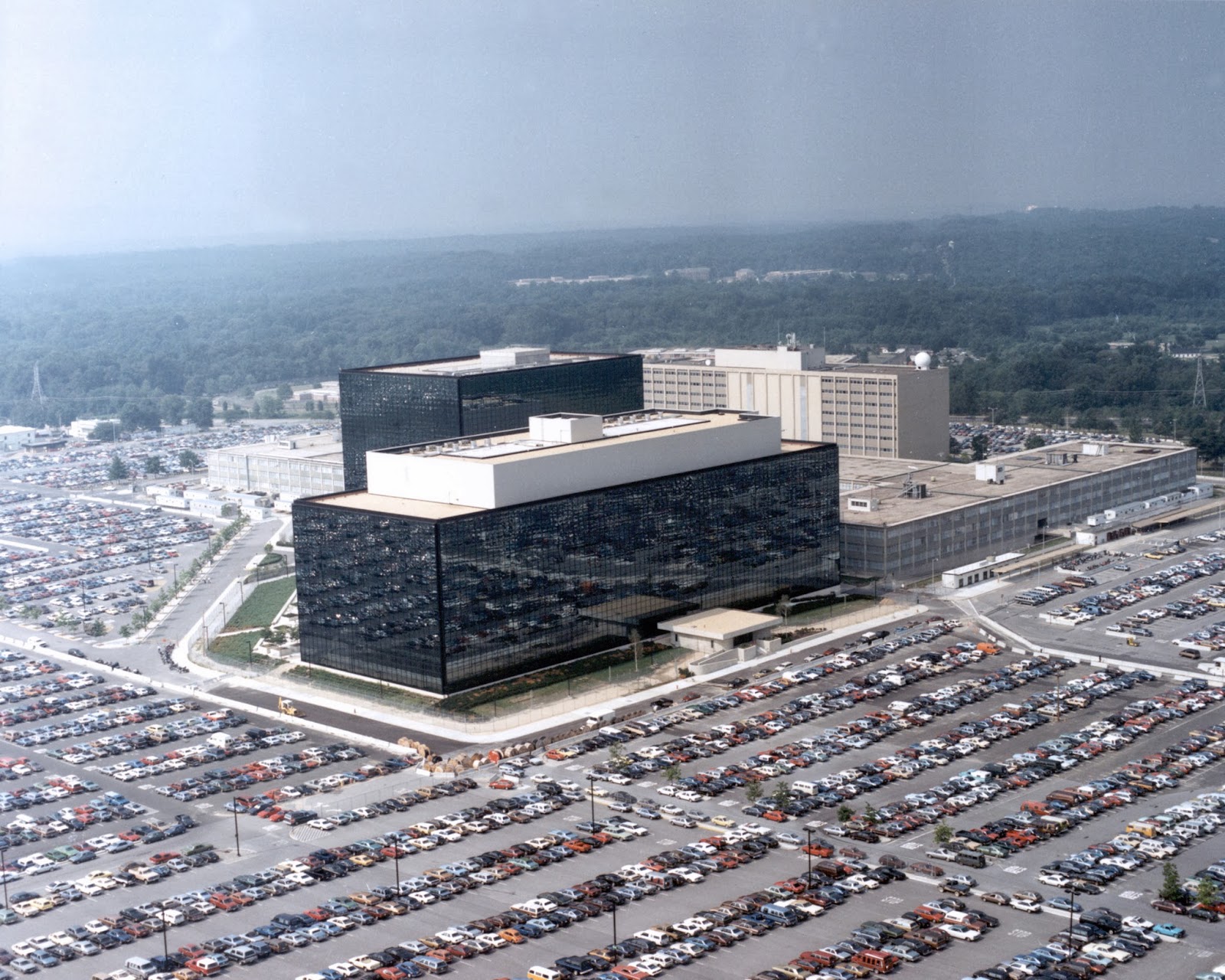
The National Security Agency at Fort Meade |
Photo courtesy of the Department of Defense
Since May 2013, each month we have learned a little more about the trove of documents that Edward Snowden took from the National Security Agency (NSA).  And with each revelation the scope of the U.S. spying program continues to grow.  To date, public opinion appears to be split between those that casually brush off the spying with a “what do I have to hide?” attitude, while others finds the revelations a much more insidious invasion of privacy.  

For lawyers working on matters with international clients based outside of the United States, the Snowden revelations raise practical issues that impact their practice given the scrutiny international communications receive under NSA surveillance programs.   As a Washington Post article noted in October, “intercepting communications overseas has clear advantages for the NSA … [bulk] collection of Internet content would be illegal in the United States, but the operations take place overseas, where the NSA is allowed to presume that anyone using a foreign data link is a foreigner.”  The Snowden disclosure has particular resonance for attorney communication with non-U.S. citizen clients, who still may be subject to U.S. jurisdiction.  If a confidential communication is sent to a Gmail account or another U.S. e-mail service provider and sent to a data center in Asia, should it be assumed that the NSA has access to it?   
By Julie Inglese

Human Rights Watch urges government leaders to begin an international discussion on “fully autonomous robot weapons.”  Although these weapons are yet to come into existence, technology is getting close and many countries have already publicly addressed their existence. 

The robots will have the capacity to select targets and kill them without further intervention by humans.  A debate is already taking place on whether the robots are a danger to human rights.  Some people believe that talks should begin now on how or if these robots should be used, while others propose an outright ban on their use before they even go into the field.
By Joe Vladeck 

Investors are either excited or skeptical about Chinese tech companies. It depends who you ask, and when you pose the question. 

On November 1st, the New York Times' Dealbook reported that the return of Chinese companies to U.S. stock markets was "still in its early days" and posited that "the question now … is whether [several] recent debuts are an anomaly or have truly managed to unfreeze a market that was once a top destination for Chinese companies seeking to list overseas." Dealbook went on to explain that in 2010, "short-sellers and regulators started exposing what grew into a flurry of accounting scandals at Chinese companies with overseas listings," and concluded that "it is too early to say whether Chinese stocks are back in favor."

Just five days later, Dealbook answered its own question. In an article written under the headline "U.S. Investors Brush Aside Fears About Chinese Internet Companies," Dealbook reported that, "[f]or American investors, love of technology has conquered a fear of China." The latter article went on to explain that Americans buyers "are snapping up shares of Chinese Internet companies going public" in the Unites States, in "striking contrast with the recent past, when accounting scams and poor governance prompted many to shun Chinese stocks."

All the while, a new scandal was brewing: the stock of NQ Mobile, a Chinese telecom company, was in free-fall, owing to allegations of accounting fraud. NQ Mobile's U.S.-listed shares fell 62 percent, and Piper Jaffray, the lead manager of NQ Mobile's IPO, suspended the Chinese firm's favorable rating. Erik Lam, the director of Asian equity at global brokerage Auerbach Grayson & Co., summed up the market's sentiment: "That certainly doesn't sound positive."
One of GJIL’s sister journals, the Georgetown Law Journal, will be hosting a daylong symposium on Nov. 8 about “disruptive technology.” It promises to be interesting given all the international drama surrounding technology of late -- from surveillance programs to intellectual property.  

The keynote will be delivered by Neal Katyal, Georgetown professor and national security guru. Other panels will focus on 3-D printing and patents, driverless cars and tort liability, and mass surveillance technology. 

By Matt Klinger

In October, the European Commission's official data protection advisory group, the Article 29 Working Party, issued its latest guidance for complying with the EU's e-Privacy Directive (affectionately known as the "Cookie Directive").

Among other provisions the new guidance provides that when accessing a website, users must have access to "all necessary information" about the types and purposes of cookies used by the site.  In addition, the guidance clarifies that a user's consent to place cookies on a device, which is required by the Cookie Directive, must be sought before cookies are set or read.  Meanwhile, the Wall Street Journal reports that Google, Microsoft, and Facebook are each developing online tracking methods that could eventually make cookies, and the new guidance, obsolete.
By Matt Klinger


The Standing Committee of China's National People's Congress amended the country's law on consumer rights and interests last month, updating the law for the first time since 1993.  In addition to increasing compensation to injured consumers and heightening penalties for violations of the law, the amendment also creates new limitations on the use of personal information.  Businesses must now keep such information confidential and implement appropriate security safeguards to protect the data, according to Hunton & Williams.  

The amendment, which takes effect in March, comes as internet sales in China hit more than $213 billion last year and the government seeks to further boost domestic consumption. 
By Matt Klinger

The hype over Google Glass continues to build as the company looks to expand its Explorers testing program and reportedly has moored a barge in San Francisco bay to market the product.  

Meanwhile, concern over the privacy implications of Glass do not appear to have abated following Google's response to questions from nine foreign data privacy commissioners in June.  Articles discussing the privacy concerns Glass raises appeared in the United Kingdom, Japan, Canada, India, and elsewhere in the last month alone. 

While the U.S. Federal Trade Commission did not join in the June letter, it is considering the privacy implications of wearable technology like Google Glass, and is hosting a workshop on the "Internet of things" next month.  

GJIL would be happy to try Glass out for itself and develop its own opinion. Here's to hoping Google reads the Summit.  
By Sam Obenhaus

While the United States has one of the highest corporate tax rates in the developed world, it is often pointed out that the effective tax rate – what corporations actually pay – is significantly lower than the official rate.  For a number of tech companies, this is largely due to one man: Feargal O’Rourke, the head of PricewaterhouseCoopers’ tax practice in Ireland.

Ireland, of course, is at the center of many tech companies tax strategies.  O’Rorke is a chief architect of many of these plans, including those used by Google, LinkedIn, and Facebook.  Each of those companies funnels its profits through Ireland on their way to other tax havens, such as Grand Cayman and the Isle of Man.  These strategies are estimated to cost the U.S. federal government and its European counterparts an estimated $100 billion per year in lost revenue.

With austerity gripping much of Europe and sequestration in the United States, Ireland has found itself in the middle of a controversy.  Governments need more revenue, and some U.S. lawmakers have started calling Ireland a tax haven.  But O’Rourke – perhaps Ireland’s biggest defender – is undeterred. 

He points out that Ireland’s tax strategies have led many multinational corporations to set up offices in Ireland.  These operations are estimated to employee approximately 100,000 people.  Further, he notes that the United States and other countries could tip the balance overnight by simply changing their own tax laws.  What O’Rourke may be less willing to discuss is his role in shaping Ireland’s tax policies. 

Bloomberg has more on O’Rourke, while Reuters reports on Ireland’s recent moves to shed its image as a tax haven.
By Matt Klinger

The U.S. National Intelligence Council's (NIC) Global Trends 2030: Alternative Worlds provides an interesting perspective on technology and the future.  According to the NIC, four technology "arenas" will shape global developments to 2030: (1) information technologies (like data solutions, smart cities, etc.); (2) automation and manufacturing technologies (like 3D printing and autonomous vehicles); (3) resource technologies (think genetically modified crops); and (4) health technologies (like human augmentation).  

The impact of technology is among five potential "game-changers" the NIC identifies that could lead to four widely varying scenarios for 2030.  These "potential worlds" largely vary based on the level of international cooperation to address global challenges and the power of non-state actors to confront (or contribute to) these issues.

Although the report doesn't make this point explicitly, the implication is clear: to avoid dangerous potential outcomes countries and individually need to develop appropriate legal regimes in concert to govern projected technological developments.