Showing posts with label human rights. Show all posts


By Maura Sokol


On February 28th, the Georgetown Law Human Rights Institute hosted a lecture by Ambassador Stephen J. Rapp, the Robert F. Drinan, S.J., Visiting Professor of Human Rights for 2017-2018. Ambassador Rapp was the United States Ambassador-at-Large for War Crimes Issues in the Office of Global Criminal Justice under President Obama from 2009 to 2015. In the position, Ambassador Rapp traveled the world extensively and worked with the Secretary of State to formulate US policy regarding the prevention and accountability of mass atrocities.

Ambassador Rapp began his lecture by acknowledging the potential tension between criminal justice and human rights but asserted that the effective pursuit of these two concepts is essentially the same and needs to be the same. In both the United States and in international law, the criminal justice process is only successful when it works with the trust of victims and victimized communities. Criminal prosecution efforts must reinforce norms against violence and abusive conduct.  

Ambassador Rapp also explained some of the history behind international criminal prosecutions and human rights. Historically, national leaders did not have to worry about facing consequences for their crimes due to the concept of sovereignty; even if they violated international treaties or harmed individuals across borders, this concept kept them largely safe from international action. Ambassador Rapp asserted that this all began to change at the Nuremberg trials after World War II. The key to Nuremberg, he says, was individual responsibility, the prosecution of men and not states or entities. This allowed for the international community to hold individuals accountable for war crimes without intruding on a nation’s sovereignty.

Another key to the Nuremberg trials was that they were organized by all of the world’s great powers at the time, and justice was not dictated by global politics. The support or lack thereof from all global powers in international criminal justice has had a huge impact on its success or failure.  This helps to explain why the Nuremberg efforts ended with the beginning of the Cold War, and not again until the end of the Cold War was there a global effort to hold individuals accountable for international crimes. This effort began again with a number of tribunals, most notably the tribunals for Yugoslavia and Rwanda enacted through the United Nations Security Council.

A third element that Ambassador Rapp believes was essential to Nuremberg, Yugoslavia, Rwanda, and other tribunals, was extensive investigations and fact-finding missions. The evidence gathered by these inquiries, sometimes gathered while the crimes were being committed, was essential to the pursuit of international criminal justice. It is useful on the one hand for linking crimes at a low level to the powerful men at the top who keep their hands clean but orchestrate the crimes. It is also useful because it provides the “big picture”, which is important to establish the required proof of context and intent for international crimes. 

The global picture is very different in 2018: many of the tribunals have closed or are in their final stages, the International Criminal Court is on shaky ground, and gaps in justice have become more apparent. The worst crimes being committed today are in places where international courts do not have jurisdiction, and Russia and China will veto efforts to create jurisdiction. Where Russia once only used their Security Council veto strategically, Russia now uses the veto power to undermine efforts to promote human rights everywhere. China argues that atrocities by countries are internal affairs. Countries that have long respected the rule of law are moving in the other direction, and increasingly leaders are elected who demonstrate a disrespect for human rights.

So, what is positive and what is possible in this new world? For one, the United Nations Human Rights Council has taken up many causes after action is blocked in the Security Council. These efforts have been successful for Syria, South Sudan, Myanmar, and many others. There are some vast differences between “soft” human rights law and the process of prosecuting international crimes, and progress must be made in efforts to bridge these two processes. Evidence collection is still crucial, and there are too many insufficiencies in inquiries and fact-finding missions that must be corrected. However, in the absence of the support that was once there from some of the great powers, if victims take up the cause and have the evidence, it is possible to build the support on the international level.
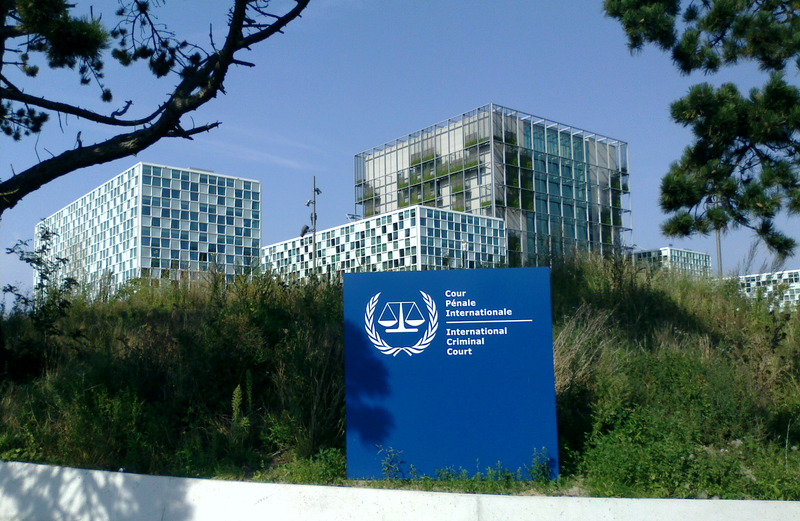

By Erika V. Suhr

File:International Criminal Court building (2016) in The Hague.png
Image: ICC Building License: CC BY-SA 4.0


On October 27, 2017 Burundi, a year after declaring its intentions, became the first country to withdraw from the International Criminal Court.  The timing of Burundi’s withdrawal coincides with a report released by the United Nations Commission of Inquiry. The report recommended that a criminal investigation on crimes committed in Burundi be initiated in response to evidence of torture, sexual violence, extrajudicial killings, disappearances, and illegitimate arrests and detentions sponsored by the regime of Burundi’s president, Pierre Nkurunziza.

At the time that Burundi announced its decision to withdraw from the Rome Statute, it seemed like it could be the leader in a wave of withdrawals by other African nations. Many nations in Africa have criticized the ICC as being a tool for post-colonial control of African nations and a proxy for Western-led regime change. The ICC came under fire around the time it chose not to pursue charges against William Ruto and Uhuru Kenyatta, Kenya’s deputy president and president, who were both accused of violence surrounding Kenya’s 2007 election, which resulted in over 1,100 deaths and disappearances. However, South Africa rescinded on its threat in March of last year after its High Court ruled that Parliamentary approval was required to carry out the measure. Gambia also backed down after a presidential election defeated the 22-year incumbent. These political events forestalled a potential exodus from the ICC by prominent African members.

Burundi’s exit is an illustration of what can perhaps be expected when the Court attacks sitting officials instead of the fringe rebel groups it has in the past. However, it might be a symptom of an underlying fatal problem. At the very least, it presents an opportunity to reflect on the future of the ICC, and how it will respond to its critics going forward.

For instance, the criticism cited by Burundi and other African countries is that Africa is unfairly targeted while other world conflicts, especially those in which Western countries are involved in, are ignored. The ICC’s record seems to support that notion to some extent. Presently, nine out of the ten formal investigations conducted by the ICC are Africa-related, and all of its trials have been against African defendants. Additionally, the glaring absence of three of the five Security Council powers from the Rome Statute (the United States, Russia, and China) rankles member states who see the ICC as a political instrument wielded against the Global South. A rebuttal to this criticism might be that of the nine African countries being investigated by the ICC, five have been referred to the Court by their own governments. In only two cases has the ICC’s prosecutor used her discretion to bring a case. Further, a look at the list of countries that are being examined by the ICC reveals a less Africa-centric perspective. Countries under “preliminary examinations” include Afghanistan, Burundi, Colombia, Gabon, Guinea, Iraq/UK, Nigeria, Palestine, Registered Vessels of Comoros, Greece, Cambodia, and Ukraine.

Second, the argument exists that the Court is wildly inefficient. Since it began functioning in 2002, judges have issued only 31 arrest warrants. 25 cases have been heard before the Court and of those cases verdicts have been issued in six of them. Ultimately, nine people have been convicted and one was acquitted. Those results have cost over $1 billion since the Court’s inception, and today the ICC has an operating cost of $145 million per year. However, one might concede that investigations surrounding the gravest human rights violations are complex and time-consuming, as evinced by ad-hoc tribunals of isolated conflicts, such as the International Tribunal for the Former Yugoslavia. This is especially so when there is no cooperation from the country in which one is investigating.

There are tensions over the Court’s willingness in the coming years to test nonmember states and regions that it has historically not pursued. For instance, in its preliminary examination of Afghanistan, will it encompass United States actors in its inquest, or even Afghan state actors, or will it choose to go after dissident groups, like the Taliban, and count on some international cooperation? Russia has already blocked two Security Council resolutions to refer the Syrian crisis to investigation by the ICC. In face of this opposition, how aggressively will the ICC pursue allies of the Russian government, or the Russian government itself? Will it target the most culpable individuals?
Notwithstanding the criticisms and the setback of Burundi’s exit, one can say that some justice is preferable to no justice and that every incremental step forward in prosecuting human rights offenses is a victory and a testament to the better angels of our humanity.

As for Burundi, it is possible that it has not escaped the Court, despite its best efforts. Under the Rome Statute, crimes in nonmember states can still be referred to the Court for investigation by the UN Security Council. In this case, the commission did recommend a referral. The Court has stated that it would still claim jurisdiction over Burundi, but it might be difficult for them to do so. The status of Burundi’s case is a preliminary examination. For it to rise to an investigation, the ICC’s judges would have to grant the request of the Court’s prosecutor, and Burundi will most likely argue that there is no legal basis for them to do so now it is no longer a party. 


By Maura Sokol


On November 15th, 2017, Georgetown University Law Center’s Human Rights Institute hosted a panel discussion on business and human rights. Monitored by Professor Mitt Regan, representatives from major corporations, the Responsible Business Alliance, and the federal government spoke about how better business practices can have an impact on human rights across the globe. Although there is international cooperation in the area of human rights, protection from the harmful impacts of business operations still varies widely. Because there is no global regulator to ensure that everyone enjoys the same basic levels of protection, there is a major governance gap in human rights. This gap is now being addressed in part by businesses, who have taken a new approach to viewing their companies as having an obligation to respect certain human rights, regardless of local laws.

Genevieve Taft-Vazquez is a Director in the Global Workplace Rights department for the Coca Cola Company, and discussed how Coca Cola has tried to move from a supply chain evaluation to a deeper look at the whole value chain of Coca Cola production and manufacturing. Coca Cola works under a franchise model, and they previously focused on ensuring respect for human rights with their independent bottlers by providing Guiding Principles for their suppliers. The company has moved to a more comprehensive approach, looking at agricultural production, advertising sponsors, human rights due diligence for mergers and acquisitions, and evaluating the implications of buying land for new bottling sites.

Katie Shay, Legal Counsel on Business and Human Rights for Oath (formerly Yahoo), discussed the issues of privacy and freedom of expression. These are the main human rights issues of concern for this type of major internet company. Oath maintains data on their users that local governments would like to access, and Oath is the gatekeeper between the information and government actors. To protect privacy rights, Oath tries to provide notice to the user in most cases. In other situations, where governments would like content to be removed, Oath works to ensure that the request was legal if the content is not in violation of Oath’s own policies on permissible content. Working with local governments in this way can be a tricky task, as the consequence of being non-compliant is often that their services will be blocked in the country at issue.

Carlos Busquets works for the Responsible Business Alliance, a group of tech companies that came together to work on human rights issues (the group has now opened up to other companies as well). The companies came together to agree on a common Code of Conduct for businesses to address a number of human rights issues. One key issue in the tech industry is the use of forced labor. A 2013 report revealed that 30-40% of those working in electronics are working under forced labor conditions. The RBA came to the conclusion that it was not enough for electronics companies to say they do not want their products made by those under forced labor; companies have to make sure that the ways workers find themselves in a forced labor situation are no longer present. Companies must then go a step further to try and change the very market that creates incentives for workers to be abused in such a way. The RBA created a set of due diligence tools for companies to use to combat practices and improve the issue and to create a market for ethical recruitment.

Jenny Stein is the Acting Team Leader for the Internet Freedom and Business and Human Rights team in the Office of Multilateral and Global Affairs within the Bureau of Democracy, Human Rights, and Labor at the U.S. Department of State. Ms. Stein’s team approaches business and human rights as a continuously evolving paradigm. The Bureau promotes human rights generally and also addresses critical issue areas, such as Burma, North Korea, and Bangladesh in the past. They work bilaterally with governments as well as with multilateral organizations such as the UN Human Rights Counsel. Major focuses currently include trying to advance accountability and transparency, and how to guide companies on their human rights responsibilities and conduct outside of the US. 

Three guiding principles in human rights law are to protect, respect, and provide remedies. Many believe that this third pillar is underdeveloped, and the panel spent some time discussing the development of remedies. Conventionally, there are two types of remedies, judicial and nonjudicial. An example of the possibilities of judicial remedies includes the current Supreme Court case of Jesner v. Arab Bank, in which the Supreme Court will address the question of whether companies can be sued abroad for human rights abuses. An example of a nonjudicial remedy is the system of complaints that can be made through the U.S. State Department if a business violates one of the OECD guidelines. However, the panelists encouraged the audience to think more broadly about the concept of remedy, and to ask ourselves: how can we remedy the broader issue, and not just an individual case? This is an ongoing and evolving issue in human rights law, and one that businesses are working to address. 
by Molly Kirwan

Council of Europe
Photo: Wikimedia Commons/Council of Europe
Theresa May, the Prime Minister of the UK, has announced plans for the British military to opt out of parts of the European Convention on Human Rights (ECHR) in future military conflicts and instead to adopt a so-called “British Bill of Rights.” This move is something that David Cameron, the former Prime Minister of the UK, alluded to previously.

History of the ECHR

The UK has been a signatory of the ECHR since 1951. However, the Convention is not self-executing, thus it required the UK to pass legislation domestically in order for its content to become effective law within the UK. This legislation was passed in the form of the “Human Rights Act” (HRA) in 1998 after Tony Blair’s Labor Party introduced it.

The ECHR actually stems from membership of the Council of Europe, not from the European Union, thus Brexit does not really affect this move. Though it is true that a country must be a member of the Council of Europe in order to be a member of the European Union, the reverse is not true, and it has not been suggested that the UK is also leaving the Council of Europe at this point.

What the Bill of Rights Would Look Like

The changes would involve derogation from the content of Articles Two (right to life) and Five (right to liberty) of the ECHR, but the UK would still be following the other mainstays of the convention such as the prohibition on torture. These derogations could only happen in times of war or public emergencies that threaten the life of the nation.

A British Bill of Rights would likely look nearly identical to the current Human Rights Act (HRA) but with a spattering of traditionally granted British rights which are not covered by the HRA, such as the right to a trial by jury. Most of the current content of the HRA stems from longstanding protections which British law offers its citizenry anyway. The greatest issue is that the UK is one of the few countries in Europe to have a common law system; most others have a variation of a Roman and civil law system, but this issue could be overcome by simply making the British Bill of Rights justiciable only in a common law court.

What the Ramifications of a Switch Might Be

This would likely not be a particularly contentious move, especially given the media’s main focus on the UK exiting from the European Union rather than on this smaller, separate issue. Other countries such as Turkey, the Ukraine, and France have given notice that they would derogate from the ECHR before, with no real ramifications. Additionally, many citizens of the UK may be supportive of this move as it is intended to shield the UK from some legal claims of military misconduct, which they have spent over 100 million pounds ($123 million) on since 2004 for cases regarding their presence in Iraq. Internationally, it is difficult to predict what the reaction would be, but one could assume it would just be seen as a reaffirmation of the British desire to distance themselves from the rest of Europe in certain respects.

There likely would not be any concrete legal ramifications because the core content of the ECHR is said to be incorporated in this British Bill of Rights, and the derogation would be limited to times of war and public emergency, which has been allowed previously when other countries derogated. Thus, while it may be frowned upon for them to alter an international obligation, they would still be comporting with the international norms of human rights law but embodied in a different text.

On the other hand, there has been some backlash from certain groups who feel this will only serve to protect those who have something to hide and is being orchestrated by those trying to undermine the rule of law and intimidate solicitors who pursue legitimate cases involving abuse by the British military.
By Sarah Akbar

On April 13, the State Department released its annual report on human rights, which singled out China, Russia, and the Middle East as some of the worst human rights violating regions. Secretary of State John Kerry pointed to a “global governance crisis” in which governments are increasingly suppressing free speech and other civil rights of citizens. The report singles out China as one such regime, and points to the repression of political advocacy and legal professionals. China fired back on April 14, releasing its own human rights report that criticized police brutality and gun crime in the United States. Spokesman Lu Kang for the Chinese government attacked the report as a tool for “irresponsible remarks about other countries’ internal politics.”
By Sarah Akbar

A FIFA-commissioned report undertaken by Harvard professor John Ruggie and released on April 14 urges soccer’s international governing body to ensure the protection of human rights or consider moving the 2022 World Cup from Qatar. Ruggie, who has created business and human rights guiding principles for the United Nations, noted numerous human rights violations surrounding the construction of new Qatari stadiums and made a series of recommendations on how FIFA should proceed. In particular, Ruggie proposes FIFA leverage its influence to press countries to improve human rights conditions or face losing their hosting privileges. FIFA officials, including President, Gianni Infantino, have responded positively to the report, and have vowed to use it as a guide to formulate its human rights policy.
By April Kent


Photo Credit: "Clashes in Burundi" by REUTERS/Goran Tomasevic 
is licensed under CC Commercial 2.0

On February 15, European Union foreign ministers released a statement that they were prepared to strengthen economic sanctions on Burundi following the failure of peace talks with opposition leaders: “The EU... stands ready to impose restrictive measures against those whose actions might have led or might lead to acts of violence and repression (and) serious human rights violations.”

The United Nations has repeatedly warned that the situation in Burundi has serious genocidal overtones, “catapulting the country back to the past” more than a decade after the civil war between Hutus and Tutsis in which tens of thousands were killed. As a result of the current political crisis, at least 400 people have already been killed and 220,000 have fled to neighboring countries.

The conflict erupted on April 25, 2015, when the ruling political party in Burundi announced that the incumbent President of Burundi, Pierre Nkurunziza, would run for a third term in the upcoming election. The announcement sparked protests by those opposed to Nkurunziza seeking an unconstitutional third term in office, setting off widespread demonstrations in the capital. In January 2016, Amnesty International published satellite images it believed to portray mass graves where killings took place. That same month, the African Union announced a plan to send 5,000 peacekeepers to Burundi, but the plan was shelved after President Nkurunziza declared a military intervention “too early.”
By William Stroupe

As Poland’s constitutional crisis deepens, the EU is increasingly likely to slap sanctions on the country for violating EU rule of law commitments. The EU’s Venice Commission, a human rights watchdog, released a highly critical report after a series of controversial actions by the Polish government. Upon election, the conservative-led government expanded the Constitutional Court and adopted new procedural rules which made it more difficult to overrule legislation on constitutionality concerns. The high court rejected the new rules as unconstitutional. However, the government has refused to publish the court’s opinion (and thus render it binding) on the basis that the high court failed to follow the new rules in concluding that they were unconstitutional. If the EU’s rule of law investigation finds violations in Warsaw, the European Council may invoke Article 7 of the Treaty on European Union to suspend rights arising from the Treaty, including Poland’s right of voting representation in the European Council. In the event a specific violation of EU law is found and prosecuted under Article 258 of the Treaty on the Functioning of the European Union, financial sanctions may also be imposed.
By William Stroupe

The European Union has lifted sanctions against 170 individuals and 3 companies in Belarus on February 25 in recognition of the country’s progress on human rights. Included among those who benefit from removal of travel restrictions and asset freezes is President Aleksandr Lukashenko, widely known as “Europe’s last dictator.” The EU established the sanctions regime in 2004 following fraudulent elections which kept Lukashenko and his supporters in office. The regime has fluctuated—mostly expanding—over the last decade. The state sanctions were finally lifted in response to the release of all political prisoners in 2015. However, both Lukashenko and the EU have been making modest progress toward warmer ties in the wake of a Russian regime which has become increasingly aggressive and unpredictable militarily as well as politically and economically. The EU has said its arms embargo will remain in effect along with sanctions on four individuals accused of involvement in the disappearance of opposition politicians.
By William Stroupe

Until recently, Poland had long been the unanticipated great post-Soviet success story. Though Hungary was the popular candidate for post-Soviet stardom, it was Poland that quickly transitioned into a market democracy. It has since been the golden child of the European project. The country is often cited as the best evidence that a totalitarian, centrally-planned, middle-income state can transform into a wealthy, liberal democracy. That reputation is now in question.

In 2015, the right-of-center Law and Justice (PiS) party won the Presidency and an absolute majority in both Sejm and Senate (the lower and upper houses of parliament respectively). The wave of popular support for right-leaning parties’ anti-immigrant, nativist stances came in the wake of a worsening refugee crisis which exacerbated frustration with EU gridlock. The first absolute majority in both houses of Parliament since Polish independence more than two decades ago was seen as a test of Poland’s young but vibrant democracy.
By David Luban*

David Luban
Presidential candidate Donald Trump has made headlines with his campaign promise to revive torture as a U.S. government practice. First, with his signature bluster, Trump declared last November that he would approve waterboarding “in a heartbeat.” He added, “And I would approve more than that. . . . And you know what? If it doesn’t work, they deserve it anyway, for what they’re doing.” In February he repeated that he would bring back waterboarding “and a hell of a lot worse.”

Trump’s promises received a frosty reception from U.S. intelligence officials. General Michael Hayden, former CIA head and an unapologetic hawk, said “If some future president is going to decide to waterboard, he’s better bring his own bucket, because he’s going to have to do it himself,” and torture memo author John Yoo and former CIA General Counsel John Rizzo agreed.
By Sarah Akbar

The State Department announced Friday that Secretary Kerry would not be accompanying President Obama on his trip to Cuba later this month, raising suspicions that there were disagreements over which dissidents the President would be allowed to meet. Shortly after Kerry’s announcement, the White House was firm in its view that the President alone would decide which members of civil society he would meet. The Cuban Commission for Human Rights reported that 1,414 political arrests occurred in Cuba in the month of January, and U.S. Representative Illeana Ros-Lehtinen brought up that more than 8,000 people had been allegedly arbitrarily arrested since the two countries decided to normalize relations in December of 2014.
By Sarah Akbar

The African Union recently concluded a high level delegation to Burundi, consisting of five Heads of State from neighboring countries to assess the extent of the political crisis in the country. The delegation was spearheaded by South African President Jacob Zuma, who was a former mediator in the Burundi peace talks between the transition government and the rebels in 2000. Violence in Burundi has seen an increase, with ethnic based violence coming to the forefront and neighboring countries using the crisis as a grab for power. The delegation marks a reversal in AU policy and a positive intervention by a coalition of African leaders to mediate the crisis and push for peace.
By Megan Abbot

Honduras has held the title for Murder Capital of the World for the last several years running, but new data suggests that from 2014 to 2015 the murder rate has dropped about 30%, from 84 to 60 per 100,000 people.  What is behind the high rates of murder across Central American countries?  What is behind such a significant decrease?

The answer is unclear.  Some point to intentional manipulation of the numbers.  Others to discrepancies in record-keeping. The Honduran government may point to mano dura or (“iron fist”) policing techniques.  But crediting hardline policing is risky.
By Sarah Akbar

Amnesty International recently released its annual State of the World report—and concluded that human rights are under threat around the world. AI claims the UN and the ICC are faltering under the weight of their workloads, and are constantly undermined by countries’ refusal to comply by their rules. In addition, 98 countries around the world have engaged in torture or ill treatment, 30 countries turned refugees away, and 18 countries committed war crimes. Salil Shetty, the Secretary General of Amnesty International ominously wrote: “Your rights are in jeopardy: they are being treated with utter contempt by many governments around the world.” The report comes on the heels of one of the worst migrant crises in world history and the increasing crackdown on activists and artists by countries around the world. If nothing else, the report should be a call to action to world leaders and international institutions.
By Megan Abbot

Police in El Salvador have begun to arrest former military officers accused in the killing of six Jesuit priests during the country’s civil war.  The murders of the Jesuits occurred in 1989, and it is presumed that the priests were killed by the regime as they attempted to broker a peace agreement that might have been too sympathetic to the guerillas.  Since 1989, an amnesty had prevented domestic prosecutions, but families of the victims now seek justice in Spain through their law of universal jurisdiction, since five of the priests were Spanish.  Elisabeth Malkin reports for the New York Times that after the US extradited one of the accused to Spain, police in El Salvador have undertaken raids to arrest several of the others accused. 
By Megan Abbot

The Sepur Zarco case, named after a military base in which widespread human rights abuses occurred against the civilian population, charges Lieutenant Colonel Esteelmer Reyes Giron, former commander of the base, and former military commissioner Heriberto Valdez Asig for their leadership of crimes of mass sexual violence and slavery.  The prosecutor is charging these crimes as violations of international humanitarian law, and thus as war crimes. Jo-Marie Burt reports for the International Justice Monitor that it is the first time that the Guatemalan court has prosecuted a crime of sexual violence from its decades-long civil war.  It is the first time that any court of any country is hearing crimes of sexual violence as crimes under international law.
By Britanny Vanderhoof

Since the conflict in Syria began, over four million people have fled and are living as refugees in host countries. Humanitarian aid has been inconsistent and cuts to assistance programs have had devastating impacts on refugees. Refugees, although living safely in host countries, may face poverty, little or no access to medical care, and few educational opportunities. The situation is causing people to lose hope and forcing families to make the impossible decision of remaining in their current situation, risking return to Syria, or attempting to make the perilous journey to Europe. 

No one solution will address all of the challenges faced by Syrian refugees. However, allowing Syrians to work is one step that could help alleviate the stresses on families described above. Allowing refugees to work would reduce their reliance on aid and increase their ability to pay for services such as medical care. Despite the necessity and importance of allowing refugees to work, Jordan has instituted policies that prevent Syrian refugees from seeking legal employment. While Jordan is not the only host country to impose this restriction (Lebanon and Turkey have also instituted barriers to employment), this article will focus on the situation in Jordan as an example of problems facing the region.  
By Brian Pierce*

At what point does a corporation cross the line between engaging in a legal, arms-length commercial transaction with a known human rights violator and becoming complicit in that human rights violator’s acts? This question has been presented again and again by various suits filed under the Alien Tort Statute (also sometimes referred to as the “Alien Tort Claims Act”). Victims of human rights abuses in Iraq, Cote D’Ivoire, South Africa, and elsewhere have pursued claims under the ATS. 

The Human Rights Law Foundation (HRLF), where I work, is proud to participate in this movement to develop the ATS as a practical mechanism for holding accountable in U.S. courts those who are complicit in the most grave human rights violations carried out around the world. HRLF is representing a group of plaintiffs who were the victims of torture and other serious human rights abuses in China as a result of their status as adherents of Falun Gong, a peaceful spiritual practice common in China, which the Chinese Communist Party has targeted for persecution since the late 1990s. These plaintiffs are pursuing claims against the American network technology company Cisco Systems, Inc., as well as some of its executives, for its role in designing, implementing, and servicing key components and features of China’s “Golden Shield,” a gargantuan system of high-tech Internet surveillance and crime control. In 2008, a set of internal Cisco documents was leaked which explicitly identified the targeting of Falun Gong as a commercial opportunity for Cisco and a primary objective of the Golden Shield.


By Victoria Hines

On October 15, the European Court of Human Rights (ECHR) ruled that Switzerland violated a Turkish politician’s right to freedom of speech by convicting him for denying the Armenian genocide. The Perincek v. Switzerland case was brought to the ECHR following a 2007 Swiss court decision that fined Perincek for his public statements calling the Armenian Genocide an “international lie.” Amal Clooney, who represented Armenia as a third party in the case, proclaimed this decision was actually a victory for Armenia because the Court found that the lower court’s characterization of the genocide as doubtful, was inappropriate. Moreover, seven of the Court’s judges proclaimed that the genocide is a clearly established historical fact.